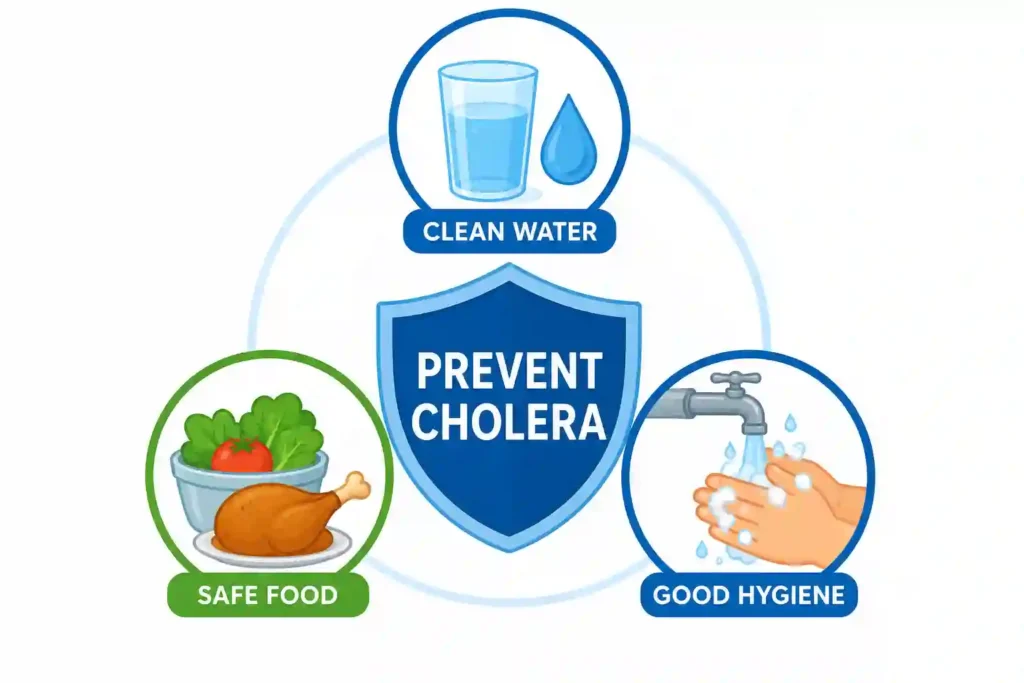
During summer, there are picnics, family gatherings, school holidays and travel. All that results in the food sitting longer outside the refrigerator. That is why knowing food poisoning symptoms and simple hygiene habits counts more in hot weather. Most foodborne illnesses are mild, but some cases become serious, unusually for young children, older adults, pregnant women, and people with weakened immune systems.
Food safety should not be considered as only a kitchen issue. According to WHO reports, unsafe food contaminated with bacteria, viruses, parasites, or chemicals can cause more than 200 diseases. Latest fact sheet from WHO estimates 866 million people globally fall ill after eating contaminated food each year. Out of them, 1.52 million people die. In the United States, CDC estimates that 48 million people suffer from foodborne illness each year. Foodborne illnesses cause 128,000 hospitalizations and 3,000 deaths. These numbers show the importance of everyday food hygiene tips as public health tools, rather than just household rules.
What Food Poisoning Can Feel Like
The most common food poisoning symptoms are diarrhea, stomach pain or cramps, nausea, vomiting, and fever. Depending on the germs contaminating food, symptoms may start within hours after eating contaminated food, or they may even take days to appear. The symptoms of a stomach infection after food can also look different from person to person. One family member may have vomiting, while another has diarrhea and fever and still someone may have none.
Always avoid self-diagnosis because many illnesses can cause similar symptoms. Consider food exposure, recent travel, sick contacts, and hydration status. Mild symptoms may become better with rest and fluids, but medical attention is necessary for worsening symptoms.
Common Germs and Timing
Different germs initiate different illness patterns. Norovirus repeatedly spreads easily through contaminated hands, surfaces, and ready-to-eat foods. Salmonella, Campylobacter, E. coli, Listeria, and other germs may be related with undercooked animal foods, unsafe produce, unpasteurized products, or bad storage. Timing alone cannot recognize the germ, but it can help your clinician decide whether testing is required. Keep notes on what you ate, when symptoms commenced, whether others also became ill, and whether you have fever, blood in stool, pregnancy, recent antibiotics, or immune problems. This information is more beneficial than guessing the cause.
When to Seek Medical Care
CDC recommends seeing a doctor for severe signs like bloody diarrhea, diarrhea lasting more than three days, fever over 102°F, repetitive vomiting that prevents fluids from staying down, or dehydration signs like very little urination, dry mouth and throat, or dizziness when standing. Pregnant people should look for advice if fever and flu-like symptoms occur because some infections can impact pregnancy.
Get immediate help for confusion, fainting, severe weakness, severe belly pain, signs of shock, or symptoms in an infant. Never give anti-diarrhea medicine to a child, an older adult, a pregnant person, or someone with bloody diarrhea unless a clinician advises it is safe.
Why Summer Food Safety Needs Extra Care
Warm weather provides germs with more chances to grow when food is not chilled, cooked, or stored properly. Outdoor meals also start with practical problems like limited handwashing, shared serving spoons, coolers opened repeatedly, raw meat carried near ready-to-eat foods, and leftovers kept for longer period.
Appropriate summer food safety starts before cooking. Organize the menu around safe storage. Raw meat, poultry, seafood, and eggs should be packed separately from salads, fruit, bread, and desserts. Use sufficient ice packs. Ensure a clean water source, soap, paper towels, and sanitizer for backup. Also arrange extra utensils. Choose a safer option if you cannot keep a risky food cold.
Clean: Wash hands, Produce, and Surfaces
First step in food poisoning prevention is handwashing. CDC advocates washing hands with soap and water for at least 20 seconds before, during, and after preparing food and before eating. Wash again after touching raw meat, poultry, seafood, eggs, flour, trash, pets, diapers, or phones.
After each food item, clean cutting boards, knives, counters, and plates with hot, soapy water. Before cutting or serving fruits and vegetables, rinse them under running water. Do not wash raw chicken or meat because splashing may spread germs to sinks, counters, and nearby foods.
Separate: Stop Cross-Contamination
When germs from raw foods move to ready-to-eat foods; it is termed as cross-contamination. Keep raw poultry, meat, seafood, eggs, and their juices separate and away from cooked foods, salads, fruit, sauces, and bread. Preferably use separate cutting boards. However, if it is not possible, then wash thoroughly between tasks.
At a barbecue, don’t place cooked meat back on the same plate that held raw meat unless the plate has been washed. Apply clean tongs for cooked food. Store raw meat in sealed containers at the bottom of the cooler or refrigerator so that juices cannot drip onto other foods.
Cook: Use Heat, Not Guesswork
Food may look done before it is safe. Utilize a food thermometer for poultry, meat, seafood, casserole, and reheated leftovers. Color, texture, and smell are not trustworthy safety tests. Pursue package instructions for frozen meals and microwave foods. These instructions also include standing time.
For safe summer food safety, ensure that hot foods remain hot after cooking. FoodSafety.gov recommends keeping hot food at 140°F or above and cold food at 40°F or below. The danger zone between 40°F and 140°F allows germs to grow fast. Reheat leftovers completely and do not taste food to decide whether it is still safe.
Chill: Refrigerate Promptly
Chilling is the process where many summer mistakes happen. Perishable food should be frigerated within two hours. If food is exposed to temperatures above 90°F, like in a hot car or picnic area, refrigerate it within one hour. Use shallow containers for leftovers so that they cool rapidly.
It is advised that if you need to cook immediately; then thaw frozen meat, poultry, and seafood in the refrigerator, under cold running water, or in the microwave. Never thaw or marinate food on the counter. Keep refrigerators at 40°F or below and freezers at 0°F or below. A simple appliance thermometer can avoid guesswork.
Know Riskier Foods and Higher-Risk People
CDC observes that riskier foods include:
- raw or undercooked poultry, meat, seafood, and eggs;
- raw sprouts;
- unwashed produce;
- cut melon;
- unpasteurized milk, juice, cider, or soft cheese;
- raw dough made with uncooked flour.
These foods need extra care, specifically for higher-risk groups. Higher-risk groups include people 65 and older, children under 5, pregnant people, and people with weakened immune systems, because these people are more likely to become very sick. For them, food hygiene tips should be even stricter. Choose pasteurized products, cook foods fully, keep away raw sprouts, keep deli foods chilled, and ask a healthcare professional about safer options if immune protection is low.
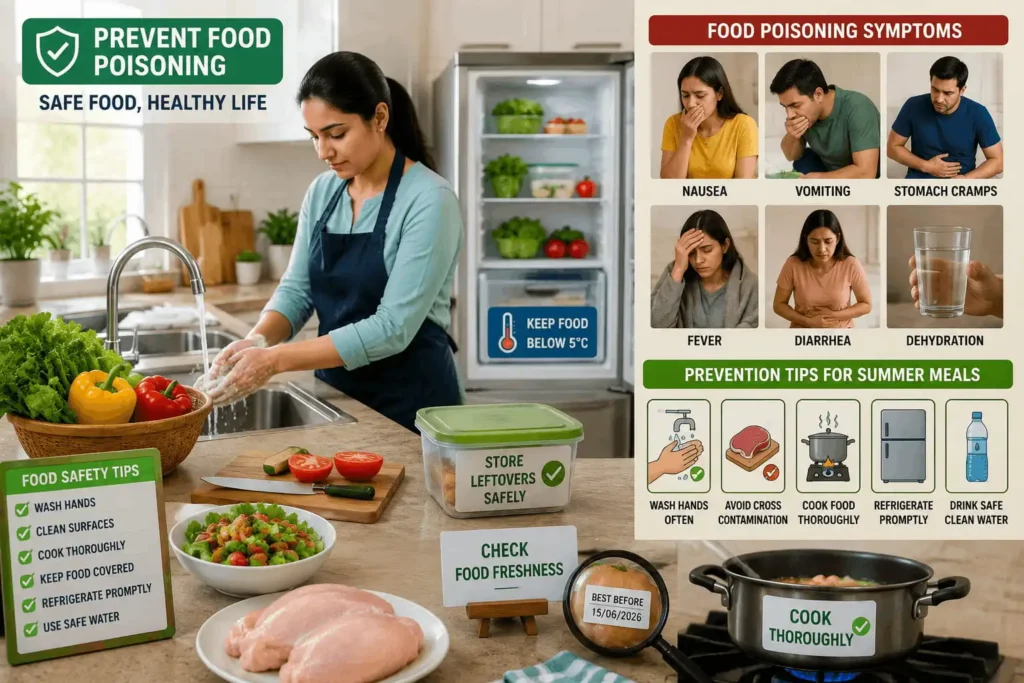
Quick Summer Meal Checklist
Before serving summer meals, check these basic precautions:
- hands washed,
- produced food rinsed,
- raw foods separated,
- food cooked to safe temperatures,
- cold foods kept on ice,
- hot foods kept hot,
- serving utensils changed,
- leftovers chilled on time.
Dispose of food that has been sitting out too long. Do not taste it if in doubt.
For travel, pack small portions, use insulated bags, keep drinks in a separate cooler so that the food cooler stays closed, and label containers with time prepared. At restaurants or events, keep away food that looks lukewarm, uncovered, poorly chilled, or handled with unclean utensils.
What to Do While Recovering
When symptoms are mild, concentrate on fluids, rest, and easy-to-digest foods when appetite returns. Oral rehydration solution may relief when diarrhea or vomiting is frequent. Keep away alcohol and very sugary drinks because they can worsen dehydration. If you are vomiting or have diarrhea, do not prepare food for others. Wash hands thoroughly after using the toilet, clean bathroom surfaces, and use separate towels if possible. Return to normal meals slowly. If symptoms worsen, fluids cannot stay down, or a high-risk person is ill, get medical advice early.