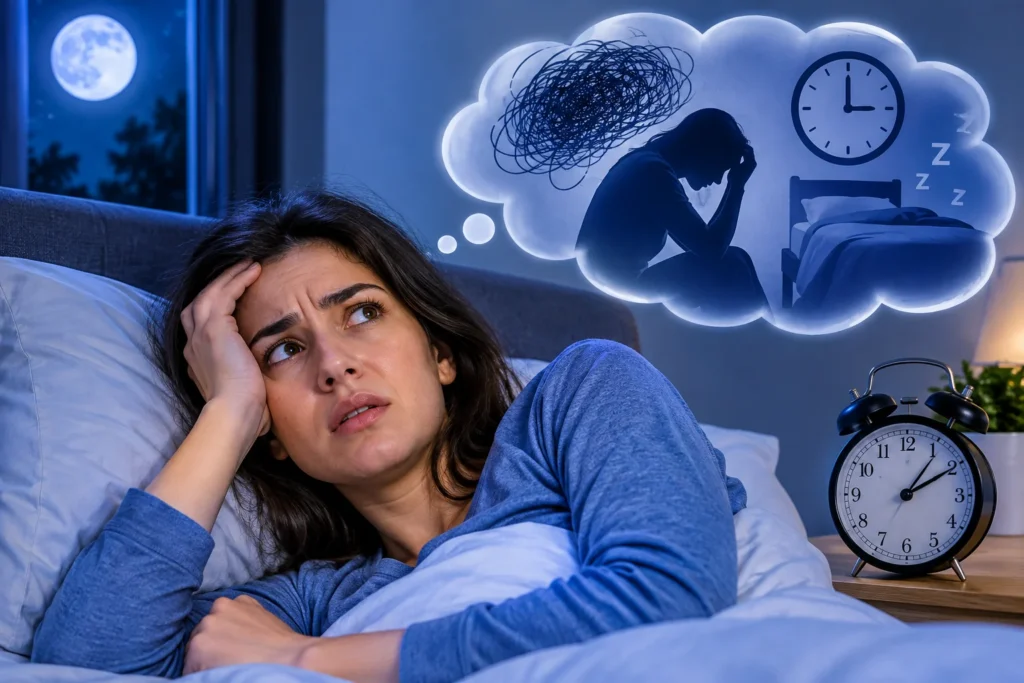
By the night sets in, when the house becomes silent, your thoughts may get louder. If you are inquiring, why do I get anxiety at night, it means that you may be feeling a loop in which worry increases alertness and lost sleep establishes more worry. The scale of sleep problems is considerable: a CDC report published in April 2026 found that 30.5% of American adults slept less than seven hours a night in 2024. Although that statistic illustrates short sleep, not the prevalence of nighttime anxiety, it also confirms why understanding sleep difficulties matters. Effective help begins by finding what keeps your nervous system on alert.
Why Do I Get Anxiety at Night?
Nighttime eliminates interferences that kept worries in the background during the day. Therefore, worries like financial concerns, relationships, health insecurity, incomplete tasks, and tomorrow’s responsibilities can abruptly draw your attention. Your brain may take these thoughts as threats, stimulating the sympathetic nervous system. Stress hormones and increase in vigilance can make your heartbeat conspicuous even while you are physically safe.
Readers asking, why do I get anxious at night? should recognize that there is no single explanation. Multiple factors such as Irregular schedules, caffeine, alcohol, certain medications, pain, menopause symptoms, trauma, depression, and anxiety disorders can be contributing. Snoring, breathing pauses, restless legs, or reflux may signal conditions for which medical assessment is necessary instead of another relaxation app.
What Are Fear of Sleeplessness and Fear of Sleep?
Fear of sleeplessness implies becoming worried by the possibility of another bad night: What will happen if I cannot function tomorrow? Repetitively checking the clock strengthens the problem. Clinicians sometimes call this conditioned arousal, implying the bedroom itself becomes associated with wakefulness, monitoring, and frustration rather than a place for rest.
A fear of sleep can be due to different reasons. Someone may dread nightmares, panic sensations, or feel in danger while unconscious. This is certainly not the same as insomnia. When the fear follows trauma, is continued, or results in avoiding sleep, a qualified mental health professional can assess the primary cause.
Recognizing Anxiety Before Bed
Common signs of anxiety before bed contain a racing pulse, tense shoulders, upset stomach, sweating, recurring what-if thoughts, and difficulty shifting attention away from perceived dangers. Some people feel tired yet surprisingly alert when they lie down. Panic symptoms can be severe, but new chest pain, severe breathing difficulty, or fainting that insist on urgent medical evaluation.
Searches like mind racing can’t sleep anxiety frequently describe rumination: thoughts circling without making decisions. Rumination is different from productive planning because it replicates the same fears. Tracking when symptoms occur, involving caffeine consumption and wake times, may disclose patterns without turning sleep into a nightly performance test.
How Stress and Poor Sleep Reinforce Each Other
With can’t sleep stress and anxiety, expectation becomes part of the problem. One difficult night can result in an earlier bedtime, daytime naps, or consuming extra hours awake in bed. Those understandable responses may decrease sleep pressure and support the association between bed and frustration. Poor sleep may also make something worse like emotional regulation and concentration the following day.
Sleep pressure is the biological drive to sleep that develops during wakefulness. Circadian rhythm is the internal timing system induced by light and routine. Realizing both improves to explain why a reliable wake-up time can be more effective than forcing an early bedtime.
How to Stop Night Anxiety: Practical Steps
People searching for how to stop night anxiety often require a practical plan, not a promise of instant sleep. Try the following habits steadily and adjust them to your health requirements:
- Sustain a stable wake-up time, that also includes weekends; pursue daylight early in the day.
- Set up a thirty-minute wind-down period with lower light and less demanding tasks.
- Write apprehensions and one convenient action for tomorrow before entering bed.
- Do not take late caffeine; review whether alcohol, nicotine, or medications worsen sleep.
- Practice comfortable slow breathing or progressive muscle relaxation instead of trying to force unconsciousness.
- If you remain alert and frustrated, leave bed temporarily for a quiet activity; resume when sleepy.
These approaches are supportive sleep, but they don’t replace treatment when insomnia continues. Do not apply strict sleep restrictions without professional guidance, specifically if you have bipolar disorder, seizures, considerable daytime sleepiness, or safety-sensitive work.
Treatment Beyond Home Remedies
Cognitive behavioral therapy for insomnia, or CBT-I, directly tackles sleep-related beliefs and learned wakefulness. The National Heart, Lung, and Blood Institute refers to a standard six-to-eight-week course covering cognitive techniques, sleep education, relaxation, and precisely supervised behavioral changes. The American College of Physicians suggests CBT-I as initial treatment for adults with chronic insomnia.
When anxiety symptoms spread beyond bedtime, cognitive behavioral therapy for anxiety, trauma-focused therapy, or another customized methodology may be required. A clinician may examine thyroid problems, medication effects, sleep apnea, or mood symptoms. Medication decisions should balance benefits, risks, interactions, and short-term versus long-term goals; sleeping pills are not a solution fir for everyone.
Costs, Therapy Access, and Lost Productivity
Night anxiety has financial effects through appointments, missed work, decreased concentration, and sometimes reiterated purchases of unproven sleep products. A RAND Europe analysis projected that inadequate sleep was linked with $280 billion to $411 billion in annual U.S. economic losses under its modeled scenarios. These are not the cost of nighttime anxiety alone or a current 2026 bill and not historical economy-wide estimates.
Treatment costs differ by country, insurance, clinician, and care setting. Before paying for help, assess covered behavioral-health visits, local community clinics, university training clinics, and clinician-guided digital CBT-I. Ask whether a program particularly delivers evidence-based CBT-I instead of generic meditation content. An affordable evaluation may prevent avoidable spending on repeated supplements or gadgets.
A sleep diary can track record of bedtime, estimated time awake, wake-up time, naps, medication changes, and daytime functioning for one or two weeks. Keep entries short and prevent clock-watching overnight. Share the pattern with a clinician rather than assessing each night in isolation. Partners can provide help by supporting a quiet routine without frequently asking whether you have fallen asleep. Employers may assist through predictable schedules and realistic after-hours expectations. For shift workers, a personalized plan is necessary for sleep timing because ordinary daylight and wake-time suggestions may not be fit for their work. Parents caring for infants also should observe achievable expectations and shared responsibilities instead of rigid rules. A sustainable method also realizes cultural routines, caregiving obligations, disability, and work schedules. Sleep advice should be compliant and compassionate, with considerable progress based on daily functioning instead of perfection. Steady improvement matters.
When to Seek Professional Help
Arrange a clinical evaluation if trouble sleeping occurs repetitively, damages daytime functioning, or continues regardless of reasonable changes. Get help sooner when anxiety is severe, nightmares follow trauma, or daytime sleepiness influences driving. If you have thoughts of self-harm, obtain direct local emergency or crisis support. Permanent symptoms deserve tailored evaluation, not self-diagnosis from a search result.
A Healthier Relationship With Sleep
The goal is not to control every thought or achieve perfect sleep every night. It is to decrease threat, develop predictable habits, and seek evidence-based treatment when required. Health Glow readers can explore related articles on stress management, sleep hygiene, mindfulness, and when to seek mental health support; editors should link only to published, relevant pages.
Sources and Evidence Notes
- CDC, 2026: Short Sleep Duration and Sleep Difficulties Among Adults: United States, 2024 — https://www.cdc.gov/nchs/products/databriefs/db559.htm
- NHLBI: Insomnia Treatment and CBT-I — https://www.nhlbi.nih.gov/health/insomnia/treatment
- American College of Physicians: Management of Chronic Insomnia Disorder — https://pubmed.ncbi.nlm.nih.gov/27136449/
- RAND Europe: Why Sleep Matters—The Economic Costs of Insufficient Sleep — https://pmc.ncbi.nlm.nih.gov/articles/PMC5627640/