You spend roughly one-third of your life asleep, yet most of us treat sleep as merely downtime between productive hours. What if those hours of rest were actually revealing critical information about your physical and mental health—information that could predict serious conditions before obvious symptoms appear?
Your sleep patterns function as a remarkably sensitive health monitoring system. Changes in how you sleep, when you sleep, and the quality of that sleep often signal underlying issues months or even years before traditional symptoms emerge. Understanding this connection transforms sleep from a passive state into an active diagnostic tool you can use to safeguard your wellbeing.
Why Sleep Disruptions Matter More Than You Think
When you experience a few restless nights, you might blame stress, caffeine, or an uncomfortable mattress. While these factors certainly play roles, persistent sleep disturbances frequently point to deeper physiological or psychological changes happening beneath the surface.
Your sleep architecture—the cycling through different sleep stages throughout the night—follows predictable patterns when you’re healthy. You transition from light sleep to deep sleep to REM sleep in roughly 90-minute cycles, repeating this pattern four to six times per night. When something disrupts this architecture consistently, it’s your body’s way of signaling that something needs attention.
Research demonstrates that sleep pattern changes often precede diagnosable conditions by significant time periods. For instance, fragmented sleep and frequent nighttime awakenings can indicate developing cardiovascular issues before you experience chest pain or shortness of breath. Similarly, changes in REM sleep duration and intensity may signal neurological changes associated with cognitive decline years before memory problems become noticeable.
The Heart-Sleep Connection You Can’t Ignore
Your cardiovascular system and sleep patterns share an intimate relationship that most people overlook until a crisis forces attention. During healthy sleep, your heart rate naturally decreases by 10-20 beats per minute, and your blood pressure drops by approximately 10-20%. This nocturnal dip gives your cardiovascular system essential recovery time.
When this dip doesn’t occur—a condition called non-dipping—it indicates your sympathetic nervous system remains activated during sleep, keeping your body in a chronic state of physiological stress. Non-dipping appears in sleep data long before hypertension becomes clinically significant, offering a valuable early warning system.
You might notice this pattern if you track your resting heart rate overnight. A consistently elevated nighttime heart rate, or one that doesn’t show the expected decrease during sleep, warrants investigation even if you feel fine during waking hours. This pattern frequently emerges in people developing metabolic syndrome, pre-diabetes, or chronic inflammation—all conditions that progress silently for years.
Sleep apnea represents one of the most dangerous yet underdiagnosed conditions revealed through sleep patterns. If you experience excessive daytime fatigue despite seemingly adequate sleep duration, wake with headaches, or your partner reports loud snoring with breathing pauses, your sleep architecture is almost certainly disrupted. The repeated oxygen desaturations characteristic of sleep apnea place enormous strain on your cardiovascular system, significantly increasing risks for heart attack, stroke, and sudden cardiac death.
Mental Health Written in Sleep Data
Your emotional and psychological wellbeing leaves distinct signatures in your sleep patterns. Depression, anxiety, and other mental health conditions don’t just affect how you feel during the day—they fundamentally alter your sleep architecture in measurable ways.
Depression typically shortens the time it takes to enter REM sleep (called REM latency) and increases REM density—the amount of rapid eye movement activity during REM periods. You might experience this as vivid, emotionally intense dreams or waking feeling mentally exhausted despite sleeping. These REM changes often appear before you recognize depressive symptoms in your waking life, making sleep pattern monitoring a potentially powerful early intervention tool.
Anxiety manifests differently in sleep data. You’ll typically see increased sleep onset latency (taking longer to fall asleep), more frequent awakenings, and reduced deep sleep percentages. Your body remains in a hypervigilant state even during sleep, preventing the full restoration that healthy sleep provides. Tracking these patterns helps you recognize when anxiety has crossed from occasional worry into a chronic condition requiring professional support.
For individuals recovering from substance use disorders, sleep pattern monitoring provides crucial insights into both physical healing and relapse risk. Substance use fundamentally disrupts sleep architecture, and recovery involves a gradual normalization of sleep patterns that can take months or even years. Modern treatment approaches increasingly incorporate sleep monitoring as both a recovery metric and an early warning system for potential relapse. Facilities like Serenity Park in Little Rock have begun integrating wearable technology that tracks sleep patterns alongside other physiological markers, allowing treatment teams to identify concerning changes before they escalate into crisis situations.
Hormonal Imbalances Hiding in Sleep Cycles
Your endocrine system orchestrates an intricate hormonal symphony during sleep, and disruptions to this performance reveal hormonal imbalances long before blood tests show abnormal values.
Growth hormone, essential for tissue repair and metabolism, releases primarily during deep sleep. If you’re not achieving adequate deep sleep, your growth hormone secretion suffers, affecting everything from muscle recovery to immune function. You might notice slower healing from minor injuries, decreased exercise recovery, or unexplained changes in body composition—all stemming from inadequate deep sleep and the resulting growth hormone deficiency.
Cortisol, your primary stress hormone, follows a predictable daily rhythm in healthy individuals. It should be lowest during the first few hours of sleep, then gradually rise toward morning to help you wake naturally. When you experience chronic stress or developing adrenal dysfunction, this pattern inverts. You might notice difficulty falling asleep despite feeling exhausted, or waking between 2-4 AM with your mind racing—both indicators of disrupted cortisol rhythms.
For women, sleep disturbances often signal hormonal transitions before other symptoms appear. The perimenopause transition frequently announces itself through changing sleep patterns—increased nighttime awakenings, reduced deep sleep, and temperature regulation issues—sometimes years before menstrual irregularities develop. Recognizing these sleep changes as hormonal signals rather than random sleep problems allows for earlier intervention and symptom management.
The Inflammation-Sleep Feedback Loop
Chronic inflammation underlies countless health conditions, from autoimmune diseases to cardiovascular problems to neurodegenerative disorders. Your sleep patterns both influence and reflect your inflammatory status, creating a feedback loop that can either promote healing or accelerate disease progression.
During healthy sleep, your body produces anti-inflammatory cytokines and regulates pro-inflammatory markers. When sleep quality deteriorates, this anti-inflammatory process becomes impaired, allowing inflammation to build. Simultaneously, existing inflammation disrupts sleep quality, creating a vicious cycle.
You can observe this pattern in your own experience. During acute illness—a cold or flu—your sleep architecture changes dramatically. You sleep more overall but with frequent disruptions, and you spend more time in certain sleep stages while others are suppressed. This represents your immune system actively fighting infection, with sleep patterns adjusting to support immune function.
When you see similar sleep disruptions without obvious illness, it often indicates chronic low-grade inflammation. Conditions like rheumatoid arthritis, inflammatory bowel disease, and chronic pain syndromes all show characteristic sleep pattern disruptions that often worsen before disease flares become symptomatic. Tracking these patterns helps you identify triggers and intervene before full flares develop.
Metabolic Health Reflected in Nighttime Patterns
Your metabolic health—how your body processes energy, regulates blood sugar, and manages weight—shows up clearly in your sleep data, often before standard metabolic tests reveal problems.
Sleep fragmentation and reduced sleep duration both impair glucose metabolism. Even a single night of poor sleep decreases insulin sensitivity, and chronic sleep disruption contributes significantly to pre-diabetes and type 2 diabetes development. If you notice increasing difficulty maintaining stable energy throughout the day, unexpected weight gain despite unchanged eating habits, or worsening sleep quality, these symptoms often cluster together as early metabolic dysfunction.
The timing of your sleep matters tremendously for metabolic health. Your body’s circadian rhythms regulate insulin sensitivity, with highest sensitivity during daytime hours. When you regularly sleep during daylight hours or maintain irregular sleep schedules, you fight against these natural rhythms, gradually degrading metabolic function. Shift workers face dramatically elevated risks for metabolic syndrome, obesity, and diabetes—risks that accumulate silently over years of circadian disruption.
Tracking Sleep Patterns: Practical Approaches
Understanding that sleep patterns reveal health information is valuable only if you can actually monitor and interpret your own sleep data. Fortunately, sleep tracking has become increasingly accessible and accurate.
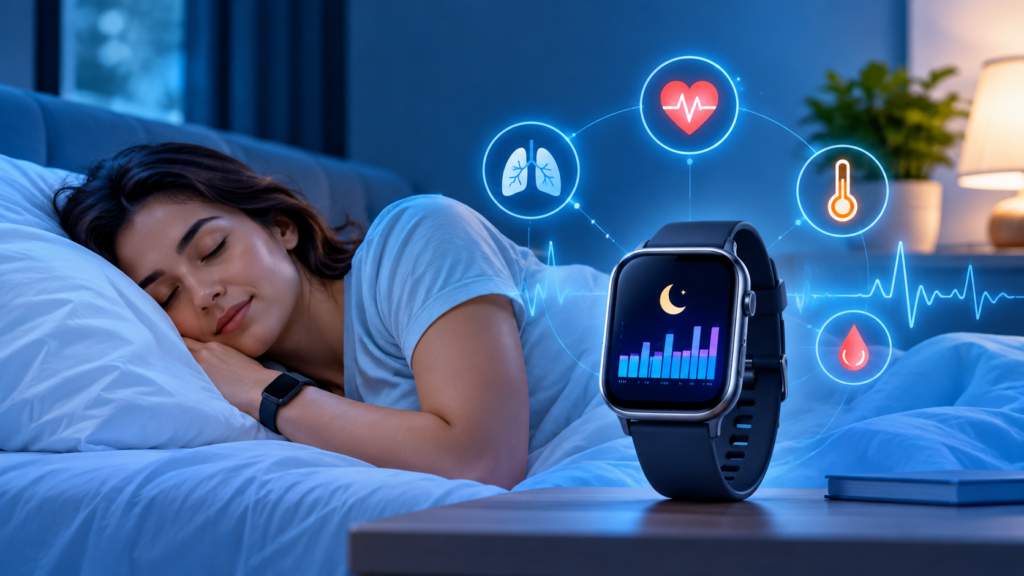
Wearable devices now offer sophisticated sleep tracking capabilities, monitoring movement, heart rate variability, respiratory rate, and body temperature throughout the night. While not as precise as clinical sleep studies, these devices provide valuable trend data that highlights concerning patterns.
When reviewing your sleep data, look for trends rather than fixating on individual nights. Everyone experiences occasional poor sleep. The patterns that matter emerge over weeks and months. Pay particular attention to:
Consistency: Do you maintain relatively stable sleep and wake times, or does your schedule vary wildly? Irregular sleep-wake patterns predict numerous health problems independent of total sleep duration.
Sleep efficiency: What percentage of time in bed do you actually spend sleeping? Healthy sleep efficiency exceeds 85%. Consistently lower efficiency suggests either difficulty falling asleep, frequent awakenings, or early morning awakening—each pointing toward different underlying issues.
Sleep stage distribution: While individual variation exists, dramatic changes in your personal patterns warrant attention. Sudden decreases in deep sleep or REM sleep often precede health changes.
Heart rate patterns: Your sleeping heart rate should be noticeably lower than your waking rate and relatively stable throughout the night. Elevated sleeping heart rate or high variability may indicate stress, overtraining, illness, or cardiovascular issues.
Respiratory patterns: Some devices now track respiratory rate and even detect breathing irregularities. Consistent respiratory disruptions during sleep require professional evaluation, as they may indicate sleep apnea or other respiratory conditions.
When Sleep Data Demands Professional Attention
Tracking your sleep patterns empowers you with information, but interpreting that information correctly requires knowing when to seek professional help. Certain patterns should prompt immediate consultation with healthcare providers.
If you consistently require more than 30 minutes to fall asleep despite good sleep hygiene, or you wake frequently during the night and struggle to return to sleep, these patterns may indicate insomnia requiring treatment. Chronic insomnia increases risks for depression, anxiety, cardiovascular disease, and impaired immune function—it’s not something to simply endure.
Excessive daytime sleepiness despite apparently adequate nighttime sleep suggests either poor sleep quality or an underlying sleep disorder. Falling asleep during sedentary activities, needing multiple naps, or experiencing irresistible sleep urges during the day all warrant sleep medicine evaluation.
Dramatic changes in your sleep patterns—particularly if they coincide with other symptoms like unexplained weight changes, mood shifts, pain, or cognitive changes—should prompt comprehensive medical evaluation. Your sleep patterns are telling you something important about your health; listening to these signals can lead to earlier diagnosis and more effective treatment.
Improving Sleep as Preventive Medicine
Once you recognize sleep patterns as health indicators, improving your sleep becomes a form of preventive medicine. Small, consistent changes to your sleep habits can significantly impact your overall health trajectory.
Establish a consistent sleep schedule, even on weekends. Your circadian system thrives on predictability, and regular sleep-wake times improve sleep quality while supporting metabolic and cardiovascular health. Aim to wake at the same time daily, allowing your sleep onset to find its natural rhythm.
Create an environment optimized for sleep. Your bedroom should be cool (around 65-68°F), completely dark, and quiet. Light exposure during sleep—even dim light from electronics—disrupts melatonin production and fragments sleep architecture. Temperature regulation affects sleep quality significantly; a room that’s too warm prevents the core body temperature drop necessary for deep sleep.
Manage light exposure strategically throughout the day. Bright light exposure in the morning strengthens circadian rhythms and improves nighttime sleep quality. Conversely, minimize blue light exposure in the evening, particularly in the two hours before bed. If you must use screens, enable blue light filters or wear blue-blocking glasses.
Exercise regularly, but time it appropriately. Physical activity improves sleep quality and helps regulate circadian rhythms, but vigorous exercise too close to bedtime can be stimulating. Aim to finish intense workouts at least three hours before bed, though gentle activities like stretching or walking can be beneficial closer to sleep time.
Address stress and mental health proactively. Since psychological wellbeing profoundly affects sleep architecture, investing in stress management and mental health support protects your sleep quality. Meditation, therapy, journaling, or other stress-reduction practices often improve sleep as a secondary benefit.
Your Sleep as a Health Dashboard
Think of your sleep patterns as a comprehensive health dashboard, displaying real-time information about systems throughout your body. Just as you wouldn’t ignore warning lights on your car’s dashboard, you shouldn’t dismiss persistent sleep disturbances as mere inconveniences.
The beauty of sleep as a health indicator lies in its accessibility. Unlike many health metrics requiring blood draws or medical appointments, you can monitor your sleep patterns continuously using affordable technology or even simple observation. This continuous monitoring provides early warning of developing health issues, often with enough lead time for meaningful intervention.
Your sleep doesn’t just reflect your health—it actively creates it. Quality sleep supports immune function, regulates metabolism, consolidates memory, processes emotions, and repairs tissues throughout your body. By prioritizing sleep and paying attention to what your sleep patterns reveal, you invest in both immediate wellbeing and long-term health.
Start tonight by simply observing your sleep with greater awareness. Notice how long it takes you to fall asleep, how often you wake, how you feel upon waking. Track these patterns over time, looking for trends and changes. Your sleep is speaking to you about your health—learning to listen might be one of the most valuable health skills you develop.