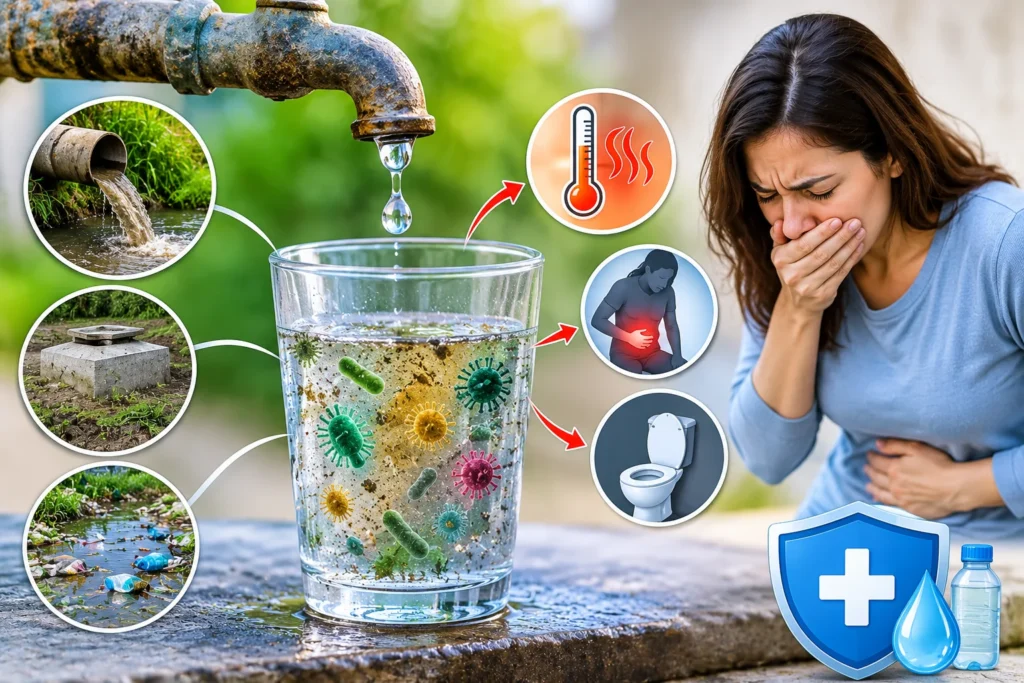
This article is for those people who are curious to know, what is waterborne illness?. It describes the causes and symptoms of waterborne illnesses. It also discusses prevention and treatment of these diseases. A clear appearance of water does not establish safety. Imagine a glass of clear water that looks clean but can still contain organisms capable of causing serious infection. Waterborne illness begins with exposure, i.e. microorganisms mix in unsafe drinking water, recreational water, or contaminated droplets can enter the body and cause disease. WHO and UNICEF described in 2025 that 2.1 billion people did not have access to safely managed drinking water in 2024. Knowing about how exposure happens facilitates families recognize symptoms early and choose effective prevention.
What Is Waterborne Illness?
A waterborne illness is an infection or other disease associated with exposure to contaminated water. Generally, infectious agents are bacteria, viruses, and parasites. However, chemical contaminants can also make water unsafe without causing an infection. The phrase what is waterborne illness therefore includes different organisms, exposure routes, and clinical outcomes. Every gastrointestinal infection is not due to contaminated water.
What Causes Contaminated Water Diseases?
Contaminated water diseases often commence when human or animal waste reaches drinking supplies through damaged pipelines, untreated sewage, flooded wells, or badly maintained storage. Treatment failures and defective sanitation increase exposure. Flooding may result in spread of pathogens across communities, while warmer conditions can be favorable for some environmental organisms. Chemical pollution insist on separate testing and treatment because normal disinfection cannot remove every chemical hazard.
How Are Waterborne Pathogens Transmitted?
Many readers are interested to know about explain the two ways that waterborne pathogens can be transmitted.
Answer: Waterborne pathogens usually need two primary routes to spread:
- swallowing contaminated water or food prepared with it,
- exposure during swimming or other water activities.
Cholera, norovirus, and Giardia are primarily spread through ingestion of contaminated food or water. Recreational exposure can involve accidental swallowing, contact with eyes or wounds, and inhaling contaminated mist. Legionella, for example, spreads mostly through inhaled water aerosols rather than ordinary drinking.
Common Types and Waterborne Diseases
Pathogens that cause waterborne disease may be bacteria, parasites and viruses. Bacterial examples are cholera, caused by Vibrio cholerae, and certain pathogenic strains of E. coli. Giardia and Cryptosporidium are parasites that can cause prolonged diarrhea. Waterborne viral diseases comprise infections caused by norovirus, hepatitis A virus, and sometimes rotavirus. These organisms are different in incubation period, infectious dose, complications, and prevention. A vaccine can prevent hepatitis A, but vaccines are not available for every waterborne pathogen.
Water Borne Illnesses Symptoms and Danger Signs
Usual water borne illnesses symptoms are diarrhea, nausea, vomiting, stomach cramps, fever, and fatigue. Some infections result in bloody stool; hepatitis A may cause jaundice, dark urine, and appetite loss. Dehydration is a major danger, specifically for infants, older adults, pregnant people, and people with weakened immune systems. Monitor for very little urine, dizziness, unusual sleepiness, dry mouth, inability to keep fluids down, or blood in stool.
Go for urgent medical assessment for severe dehydration, confusion, persistent vomiting, bloody diarrhea, or worsening illness. Children with lethargy, sunken eyes, or markedly reduced urination need prompt evaluation.
How Doctors Diagnose Waterborne Infections
Clinicians evaluate symptoms, hydration, travel, drinking-water exposure, recent flooding, and whether others are ill. Stool polymerase chain reaction testing, culture, or parasite testing may detect the organism when results will alter care or support outbreak investigation. Blood tests can estimate dehydration and kidney function in severe cases. Discuss swimming, untreated wells, recent travel, and household clusters; these clues facilitate distinguishing water exposure from other causes.
Treatment for Waterborne Diseases
The strategy of treatment for waterborne diseases involving diarrhea is restoring lost fluid and electrolytes. Oral rehydration solution has a correct balance of salts and glucose to enhance absorption. Continue feeding appropriate for age and breastfeeding when possible. Intravenous fluids may be necessary in severe dehydration. Organism-specific medicines prescribed by a clinician is essential for some bacterial and parasitic infections. However, antibiotics do not treat viral diarrhea and can be unsuitable for certain E. coli infections.
Do not prescribe antibiotics or anti-diarrheal medicines at your own or purchase over the counter particularly for children or bloody diarrhea. Healthcare professionals may suggest zinc supplementation for children in settings consistent with WHO guidance. Treatment plans are based on age, pregnancy, underlying conditions, and laboratory findings. There is no single medication that treats every illness acquired from water.
Practical Prevention at Home and Outdoors
Prevention works best as a series of barriers instead of one product. Use a consistently treated supply, keep household storage protected, and follow public-health advisories. When authorities issue a boil-water notice, use boiled water as recommended. Remain cautious that boiling kills germs but does not make chemically polluted water safe. For emergencies, keep stock of sealed drinking water in clean containers and restore supplies according to local advice. If a neighborhood reports an outbreak, apply the official alert to find affected streets, recommended treatment, and the date of the next update. Home filters vary: their certifications identify which microbes or contaminants they can decrease; therefore, read the exact product claim. Floodwater may have sewage and industrial substances mixed in the water; never believe that boiling makes floodwater safe. People with weakened immunity may require stricter precautions, specifically against Cryptosporidium. Schools and workplaces can support prevention by preserving sink in working conditions and make certain toilet facilities remain sanitary. Community reporting of broken pipelines and sewage leaks can facilitate utilities to respond before contamination spreads. Check official advisories regularly because instructions may change after laboratory testing.
- Wash hands with soap after toilet use, diaper changes, and before food preparation.
- Hold and test private wells; inspect tanks, pipes, and household filters.
- Use proper filtration and disinfection for the suspected organism; ordinary chlorine can be less effective against Cryptosporidium.
- Keep children from swallowing swimming-pool or lake water; prevent swimming while ill with diarrhea.
- Wash produce with safe water and separate raw ingredients from ready-to-eat meals.
Waterborne Disease News: What Changed in 2026?
For waterborne disease news, recent cholera surveillance displays why timely water and sanitation investment is relevant. The European Centre for Disease Prevention and Control reported 249,136 cholera cases and 1,970 deaths globally from January 1 through September 28, 2026, based on available country reports. These totals are subject to surveillance gaps and later corrections. Outbreak reports should not be mistaken with the full burden of all water-associated disease.
Healthcare Costs and Economic Consequences
Water-related infections impose direct costs for clinic visits, tests, medicines, rehydration, hospitalization, and transport. Families also lose income through missed work and caregiving. Community outbreaks can interrupt schools, tourism, food businesses, and local productivity. Public spending on safe treatment systems, sanitation, surveillance, and rapid communication can avert medical expenses and economic disruption, although local costs vary widely. A single universal treatment-price estimate would be misleading across countries.
When Should You Contact a Professional?
If symptoms develop after suspected exposure, begin safe hydration and contact a clinician when signs are persistent, severe, or unusual. Report suspected clusters to local health authorities. For household safety, consult the water utility or public-health department rather than relying only on taste, smell, or clarity. Related Health Glow reading opportunities include proposed articles on dehydration warning signs, oral rehydration, safe drinking water, and preventing gastrointestinal infections; confirm that matching pages exist before linking.
Public health teams also track clusters by location and time, test water when appropriate, and communicate actionable advisories. These measures are particularly valuable after floods, infrastructure failures, or displacement because access to clean water can change quickly. Households should retain emergency supplies and follow official guidance when service is interrupted.
A Safer Next Step
For households, the rational answer to what is waterborne illness is to decrease exposure before symptoms start: confirm drinking-water safety, practice hygiene, recognize dehydration, and pursue prompt medical advice for red flags. Use Health Glow as a starting point for health literacy, not a substitute for diagnosis or emergency care.
References
WHO/UNICEF, JMP 2025 household drinking water report — https://data.unicef.org/resources/jmp-report-2025/
WHO, Diarrhoeal disease fact sheet (2024) — https://www.who.int/en/news-room/fact-sheets/detail/diarrhoeal-disease
ECDC, Cholera worldwide overview (28 September 2026) — https://www.ecdc.europa.eu/en/all-topics-z/cholera/surveillance-and-disease-data/cholera-monthly
WHO, Cholera global situation updates — https://www.who.int/emergencies/situations/cholera-upsurge