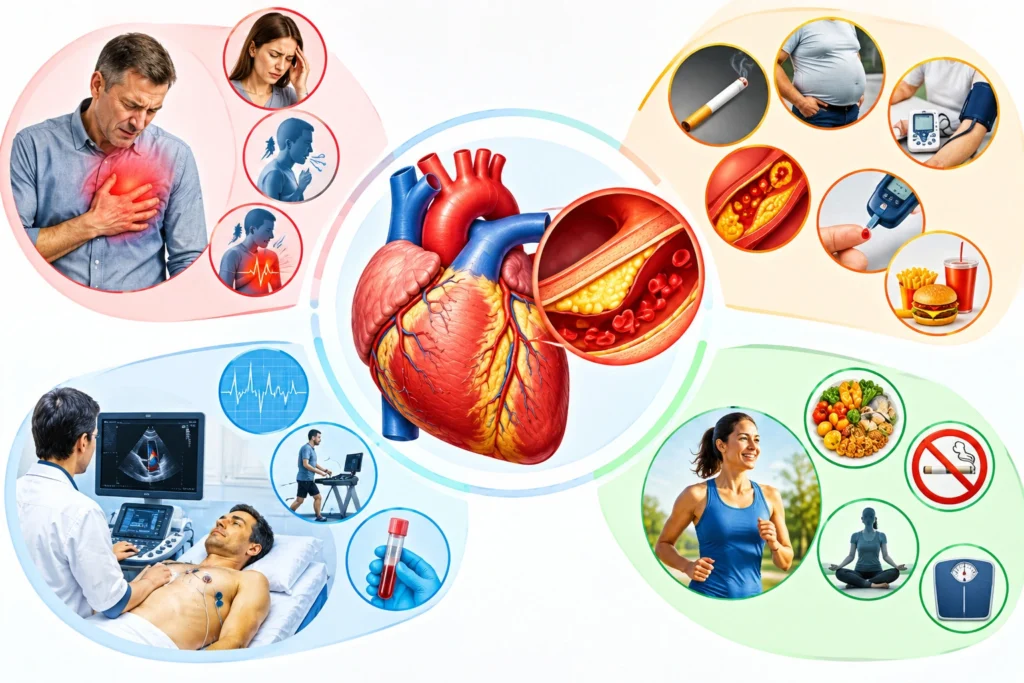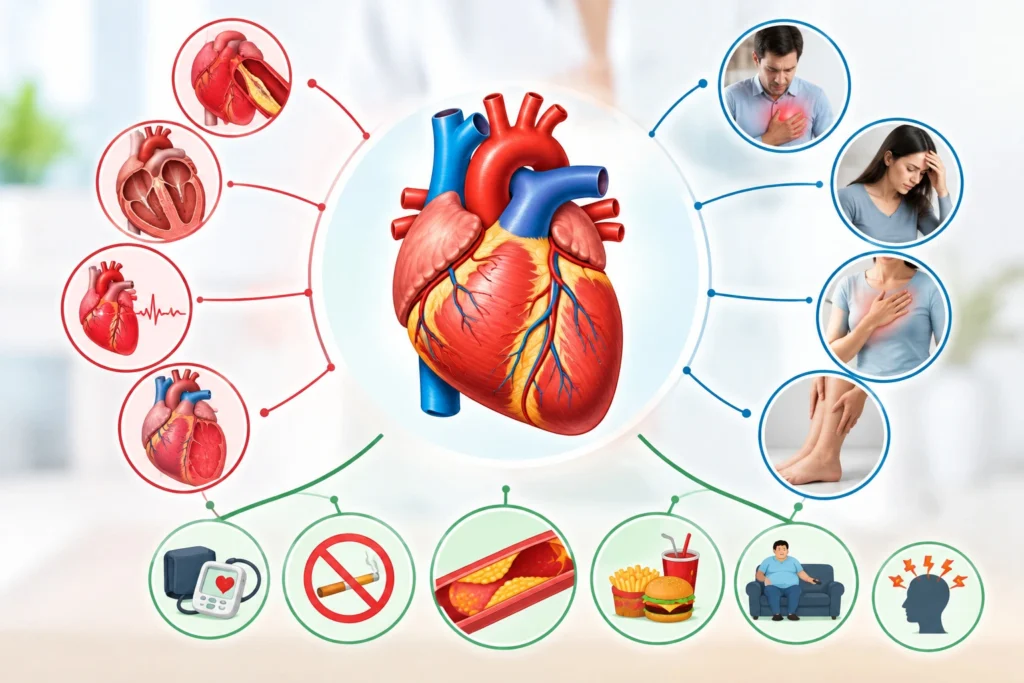
There are many reasons for chest discomfort. Therefore, it is commonly said that Chest discomfort seldom arrives with an exact label. It may feel like pressure during many situations such as:
- a hurried walk,
- breathlessness on stairs,
- fatigue that seems out of proportion to the day.
Those experiences can be symptoms from many conditions or diseases. Rejecting them as nothing or diagnosing yourself from a checklist is not safe. The pattern, timing, triggers, medical history, and examinations are all important.
If you understand coronary artery disease symptoms; it can help you explain a change clearly and realize when waiting is risky. It cannot verify the diagnosis. Coronary artery disease (CAD) manifests in many ways: it may cause anticipated symptoms, less standard symptoms, or no symptoms at all until a complication follows. This guide provides explanation on what CAD is, what it may feel like, how clinicians investigate it, and which prevention basics warrant attention.
What is Coronary Artery Disease?
CAD develops When plaque gathers in the walls of coronary arteries, which supply oxygen-rich blood to heart muscle; it results in coronary artery disease (CAD). Plaque consists of cholesterol and other substances. Over time, the process, called atherosclerosis results in narrowing of an artery and limiting blood flow. A plaque may also rupture, make a clot that suddenly blocks flow and leads to a heart attack.
The Cad burden is considerable. CDC data show that almost 1 in 20 U.S. adults aged 20 or older has CAD. The agency also reports that coronary heart disease, which is the most common heart-disease type; it killed 371,506 people in the United States in 2022. These figures emphasize the value of timely assessment.
What Do Coronary Artery Disease Symptoms Feel Like?
The most common symptom of CAD is angina. Angina symptoms can be pressure, squeezing, heaviness, tightness, burning, or discomfort in the chest. The sensation can radiate or spread to one or both arms, shoulders, neck, jaw, back, or upper abdomen. Some people describe indigestion instead of pain.
With stable angina, symptoms often appear in a pattern: exertion or emotional stress brings the symptoms on, rest eases the symptoms, and similar activity creates a similar response. Any new chest symptom still demands medical assessment. Symptoms that appear at rest, they are becoming worse, last longer, or feel differently may signal an acute coronary syndrome and emergency attention becomes essential.
Other possible CAD symptoms comprise:
- Shortness of breath, that accompanies or does not accompany chest discomfort
- Unusual fatigue or decreased ability to complete familiar activities
- Weakness, dizziness, or light-headedness
- Nausea, vomiting, or a cold sweat
- Pain or discomfort in the jaw, neck, back, shoulder, arm, or stomach
These features are not explicitly limited to CAD. Reflux, muscle strain, anxiety, lung disease, anemia, and other conditions can cause overlapping symptoms. Contrary to this, a person with CAD may not have noticeable chest pain. NHLBI notes that coronary heart disease can be “quiet” until a heart attack or another complication occurs.
When Is Chest Discomfort an Emergency?
Immediately call 911 in the United States, 1122 in Pakistan or your local emergency number, for chest pressure, squeezing, fullness, pain, or discomfort that continues more than a few minutes, returns, occurs even at rest, or is accompanying shortness of breath, sweating, nausea, faintness, or pain in the arm, shoulder, jaw, neck, back, or stomach. Never drive yourself when emergency transport is available.
The CDC emphasizes that earlier treatment can limit damage to heart-muscle. Emergency clinicians can perform ECG and blood tests to verify whether a heart attack is occurring. Do not wait while trying to decide whether discomfort is bad enough, and do not take aspirin or another medicine unless an emergency dispatcher or clinician recommends it for your circumstances.
What Raises the Risk of CAD?
Coronary artery disease risk factors interrelate; having one does not ensure disease, and having none that you know about does not make symptoms harmless.
Factors that can be modified or treated consist of:
- Tobacco smoking and exposure to secondhand smoke
- High blood pressure
- High LDL cholesterol or other unhealthy lipid levels
- Diabetes and poorly controlled blood glucose
- Low physical activity
- Eating patterns high in sodium, saturated fat, or highly processed foods
- Inadequate sleep, untreated sleep apnea, and harmful alcohol or drug use
Factors that cannot be altered include increasing age, biological sex-related patterns, and family history, specifically premature heart disease in a close relative. Other factors that may also influence risk include chronic kidney disease, inflammatory disorders, pregnancy complications, and social conditions affecting preventive care.
How Is Coronary Artery Disease Tested?
History, Examination, and Basic Tests
A clinician asks where discomfort occurs, what triggers it, how long it lasts, what relieves it, and what accompanies it. They review family history, medicines, tobacco use, blood pressure, and other risks. Blood tests may assess cholesterol, triglycerides, glucose, and possible contributors. An electrocardiogram (ECG) records electrical activity and may reveal ischemia, a prior heart attack, or another explanation, but a normal resting ECG does not rule out CAD.
Imaging and Stress Testing
An echocardiogram uses ultrasound to assess heart structure and pumping. During a stress test, exercise or medication makes the heart work harder while an ECG and sometimes imaging look for evidence of reduced blood flow. Coronary CT angiography creates detailed pictures of coronary arteries. A coronary artery calcium scan measures calcified plaque and may refine preventive decisions in selected people; it is not an emergency heart-attack test or a general test for every adult.
Coronary Angiography
In invasive coronary angiography, contrast dye is delivered through a catheter and X-rays show the coronary arteries. It may be used when symptoms or other tests suggest significant blockage, or when a procedure might be needed. Every test has benefits, limitations, and potential harms, including radiation, contrast exposure, false positives, or procedural complications. Testing should answer a defined clinical question.
Can Coronary Artery Disease Be Prevented?
Not every case is preventable, but addressing modifiable risks can lower the chance of developing CAD or experiencing complications. Prevention is most useful when it becomes a realistic, supported plan.
- Know your blood pressure, cholesterol, and blood-glucose results; ask what targets are appropriate for you.
- Avoid tobacco. If you smoke, ask about counseling and approved quit-support options.
- Build toward regular physical activity that fits your health, mobility, and clinician’s advice.
- Emphasize vegetables, fruits, whole grains, legumes, nuts, unsaturated fats, and varied protein sources while limiting excess sodium, saturated fat, and highly processed foods.
- Prioritize sufficient sleep and discuss possible sleep apnea, especially with loud snoring or daytime sleepiness.
- Take prescribed medicines as directed; discuss cost, side effects, or concerns before changing them.
- Keep routine care and manage diabetes, kidney disease, high blood pressure, and cholesterol with qualified professionals.
The Practical Next Step
Knowledge about coronary artery disease symptoms is beneficial when it leads to timely action instead of self-diagnosis. Look for emergency help for possible heart-attack symptoms. For repeated exertional discomfort, unexplained breathlessness, or failing stamina, arrange medical assessment and record the timing and prompts. Compare coronary heart disease with other types of heart disease in Health Glow’s pillar guide, then look at related guides on heart failure and arrhythmia.
Medical Disclaimer
This article presents general education and does not diagnose, treat, calculate personal risk, or replace advice from a qualified healthcare professional. In an emergency, call your local emergency number.