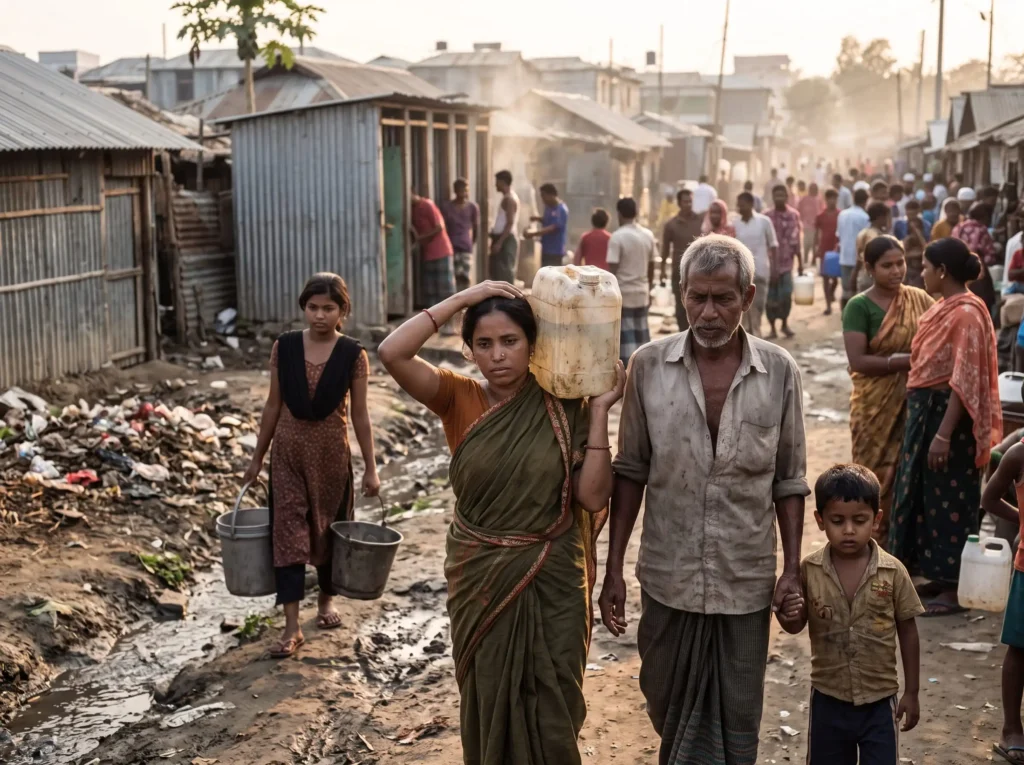
Monsoon rain is beneficial in that they can refill wells, cool the air, and support crops, but it can also mix sewage, animal waste, chemicals, and surface runoff into water sources. During floods, even a familiar tap, hand pump, storage tank, or household filter may become risky. That is why safe drinking water during monsoon is a rational family health priority, not just an emergency topic.
WHO connects contaminated water and poor sanitation with cholera, diarrhoea, dysentery, hepatitis A, typhoid, and polio. It also assesses that unsafe drinking water, sanitation, and hand hygiene cause almost one million diarrheal deaths each year. In 2025, WHO and UNICEF reported that 2.1 billion people still did not have access to safely managed drinking water. These figures justify why monsoon water safety deserves simple routines at home and schools.
Understand the Risk Before You Drink
Floodwater is not simply muddy rainwater. CDC alerts that floodwater may contain human and livestock waste, industrial or household chemicals, germs, sharp debris, and other hazards. Boiling may kill many germs, but it will not withdraw fuels, heavy metals, salts, pesticides, or other toxic chemicals. Use bottled water or another approved source and observe health advice If water smells like fuel, looks chemically contaminated, comes from a flooded industrial area, or is officially declared unsafe.
Do not assess safety by appearance. Clear water can still have germs, and cloudy water can block disinfection methods. After heavy rain, regard any doubtful source as unsafe until testing by authorities, or appropriate treatment proves otherwise.
Choose the Safest Available Source First
The best drinking water safety tips start before treatment. Always use sealed bottled water, municipal water confirmed safe by authorities, protected borehole water, or water from a tested supply when available. Prevent collecting water near open drains, latrines, animal sheds, floodwater, garbage piles, or agricultural runoff. If you trust on a private well, hand pump, roof tank, or storage tank that was flooded, do not consider it is safe after the water level falls. It may require cleaning, disinfection, and testing.
Keep one clean container for treated drinking water only. Do not store water in old pesticide, fuel, paint, or chemical containers even after washing. Replace a container if it smells, is cracked, has slime, or cannot be closed.
Boil Water When You Can
Boiling is one of the most trustworthy home methods for killing germs in emergency water. CDC recommends bringing clear water to a rolling boil for one minute, or three minutes at elevations above 6,500 feet, then cooling it naturally and storing it in clean, covered containers. If water is cloudy, allow it settle first, then filter it through a clean cloth, paper towel, or coffee filter before boiling.
Boiling is beneficial for drinking, making infant formulas when advised, preparing oral rehydration solution, brushing teeth, rinsing utensils, and washing foods that will be eaten raw. However, boiled water can be contaminated again if it is poured into a dirty bottle, dipped with unwashed hands, or left uncovered.
Use Filtration and Disinfection Carefully
Household filters can help, but they are not all the same. Some eliminate dirt, some decrease bacteria or parasites, and many do not eliminate viruses. Follow the filter label, replace cartridges on time, and never accept that a decorative or taste filter makes flood-affected water safe. CDC observes that after filtering, a chemical disinfectant may still be necessary to kill viruses and bacteria.
Chemical disinfection can be practical when boiling is not possible, but it must be done appropriately. Use only products meant for drinking water disinfection, like suitable unscented chlorine bleach or approved chlorine dioxide tablets and follow label instructions. CDC recommends allowing disinfected water to stand for at least 30 minutes before drinking. Disinfection works less well in cloudy, cold, or very dirty water, so settling and filtering first matters.
Store Treated Water Safely
Good WASH tips frequently fail at the storage step. Treated water should be stored in a clean, narrow-necked container with a tight lid. Pour water out, or use a clean tap, rather than dipping cups or hands into the container. Wash the outside and lid repeatedly because wet surfaces can carry germs.
Locate drinking water above floor level, away from children, animals, toilets, drains, garbage, and flood splash. Label treated water clearly so that it is not mixed with untreated water. Use stored water within a secure time and clean the container before refilling. In schools or offices, assign one person to verify that drinking containers are covered, taps are clean, and cups are not shared.
Protect Hygiene and Sanitation Too
Waterborne disease prevention is not limited only to the water you drink. Germs spread through hands, food, surfaces, toilets, diapers, and contaminated floodwater. Wash hands with soap and safe water before cooking, eating, feeding children, preparing medicines, or making oral rehydration solution. Wash after using the toilet, cleaning a child, touching animals, managing garbage, or contact with floodwater.
Where possible, keep toilets, latrines, and drains away from water sources. Dispose of child feces safely. Keep food covered, cook completely, and avoid raw foods to be washed in unsafe water. CDC also recommends using clean water for brushing teeth after water-related emergencies.
Know Warning Signs of Diarrheal Illness
Many stomach illnesses improve, but some become dangerous rapidly, chiefly in infants, older adults, pregnant people, and people with chronic disease or weak immunity. Look for medical advice without delay for bloody diarrhea, repeated vomiting, high fever, severe abdominal pain, signs of dehydration, diarrhea lasting more than a few days, or illness after known contact to floodwater or unsafe water.
Dehydration warning signs consist of very little urination, extreme thirst, dizziness, dry mouth, sunken eyes, unusual sleepiness, confusion, or a child who cannot drink well. Use oral rehydration solution as directed by a health worker or product label, but do not wait to care when severe signs appear.
Build a Simple Household Monsoon Plan
Before heavy rain, be prepared: clean storage containers, check lids, keep soap available, and store a small emergency water supply. Keep water-treatment supplies where adults can find them rapidly. Save local emergency numbers and official water-advisory channels. After flooding, examine wells, tanks, pipes, filters, toilets, and drains before going back to normal use.
For families, a written checklist can avoid confusion. Checklist may contain following points:
- Mark which water is untreated, and which is treated,
- who is responsible for boiling or collecting water,
- what symptoms require care.
Simple repeated daily habits are stronger than being panic during a flood.