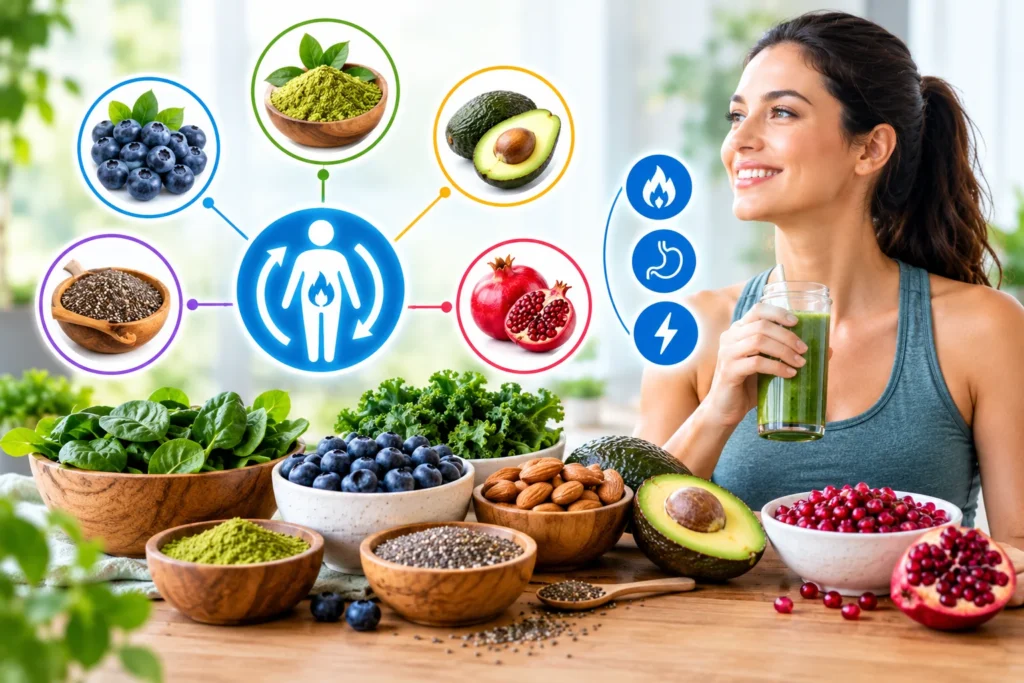
When people ask what is the best superfood, they usually want one food that increases energy, speeds metabolism, and simplifies weight control. Nutrition science is less dramatic. Harvard Health notes that metabolism depends strongly on genetics, body composition, age, activity, sleep, and energy balance; no single food can “switch on” fat burning. The better question is which nutrient-dense foods support a healthy eating pattern. This guide examines green tea, berries, eggs, nuts and seeds, and leafy greens.
What Are Superfoods, and What Is the Best Superfood Really?
Superfood is a popular nutrition term, not a regulated scientific category. It usually describes foods rich in vitamins, minerals, fiber, protein, healthy fats, or protective plant compounds. A useful everyday super food should also be practical enough to eat regularly.
So, what is the best superfood? There is no universal winner. Someone needing protein may benefit from eggs; someone seeking fiber may prefer berries, nuts, seeds, or greens. The American Heart Association’s 2026 guidance emphasizes vegetables, fruits, whole grains, healthy protein sources, and unsaturated fats rather than isolated “miracle” foods.
Metabolism is the chemical process that converts food and stored energy into fuel. Basal metabolic rate is the energy needed for essential functions at rest. Digestion slightly affects energy expenditure, but total diet, muscle mass, movement, and energy balance matter more.
What Are the 5 Superfoods to Boost Metabolism?
If the goal is to identify what are the 5 superfoods that combine nutrition, convenience, and evidence, these are strong choices.
1. Green Tea
Green tea contains caffeine and catechins, including EGCG. These may modestly increase thermogenesis, or heat production during energy use. Meta-analyses show small weight effects, not enough to treat green tea as weight-loss therapy.
Advantages include:
- Very few calories when unsweetened.
- Low cost per serving.
- A practical replacement for sugar-sweetened drinks.
People who are caffeine-sensitive, pregnant, taking certain medicines, or considering concentrated extracts should seek professional advice.
2. Berries
Berries provide fiber, vitamin C, and polyphenols, plant compounds studied for antioxidant and anti-inflammatory activity. Their sweetness can replace desserts with more added sugar. Harvard Health highlights berries as nutrient-rich foods linked with healthier dietary patterns.
Berries do not dramatically raise metabolic rate. Their value is supporting fullness and diet quality. Frozen unsweetened berries often cost less than fresh berries out of season and reduce spoilage.
3. Eggs
Eggs provide high-quality protein, choline, vitamin B12, and selenium. Protein has a higher thermic effect than fat or carbohydrate and also supports muscle maintenance.
For an everyday super food, eggs are practical because they cook quickly and can make meals more filling. Current cardiovascular guidance focuses strongly on overall dietary patterns and saturated fat. People with individualized medical advice should follow their clinician’s recommendations.
4. Nuts and Seeds
Nuts and seeds provide unsaturated fats, protein, fiber, minerals, and bioactive compounds. Despite being energy-dense, portions can fit a weight-management diet because they improve satiety.
Use small portions:
- Add seeds to oatmeal or yogurt.
- Use a small handful of nuts as a snack.
- Choose unsalted versions when possible.
Peanuts, sunflower seeds, and store brands can cost less than premium nut mixes.
5. Leafy Greens
Spinach, kale, collard greens, lettuce, and arugula are low in calories while supplying folate, vitamin K, carotenoids, minerals, water, and fiber. They increase meal volume and support fullness.
Leafy greens are not metabolic stimulants. Their advantage is nutrient density. Add them to omelets, soups, curries, sandwiches, or grain bowls. Frozen spinach is often economical and limits waste.
5 Superfoods to Boost Metabolism: What the Evidence Means
The phrase 5 superfoods to boost metabolism can mislead if boost implies major calorie burning. Harvard Health explains that food alone rarely changes metabolic rate substantially. Caffeine, protein, and some plant compounds may have modest short-term effects, while sustainable weight management depends more on energy intake, activity, muscle, sleep, and stress.
These foods help because they improve diet quality:
- Eggs, nuts, and seeds provide protein.
- Berries, seeds, nuts, and greens provide fiber.
- Unsweetened green tea can replace high-calorie drinks.
That is more useful than chasing a metabolism “hack.”
Superfoods and Weight Loss: Helpful, Not Magic
The relationship between superfoods and weight loss is indirect. Weight change depends largely on long-term energy balance, while genetics, medicines, sleep, stress, and medical conditions also matter. Harvard Health reported in 2026 that about 72% of U.S. adults aged 20 and older were overweight or had obesity.
These foods help most when they replace less filling choices: berries for candy, nuts for chips, eggs for a sugary pastry, greens added to lunch, or unsweetened tea for soda.
Cost Comparison of 5 Superfoods
A useful cost comparison of 5 superfoods should consider price per serving, shelf life, waste, and nutrient value, not package price alone.
- Green tea: usually inexpensive per serving.
- Eggs: often affordable high-quality protein, although prices fluctuate.
- Leafy greens: seasonal produce may be cheap; frozen spinach stores longer.
- Berries: fresh berries can be costly; frozen options often improve value.
- Nuts and seeds: higher upfront cost, but small portions help; peanuts and sunflower seeds are economical.
Budget-friendly eating does not require premium branding. Compare unit prices, use frozen produce, choose store brands, and skip costly powders.
How to Include an Everyday Super Food
A simple routine works better than a perfect plan:
- Breakfast: eggs with spinach, or oatmeal with berries and seeds.
- Lunch: a grain bowl with leafy greens and nuts.
- Snack: fruit with a small handful of nuts.
- Dinner: add greens to soup, curry, pasta, or beans.
- Drinks: replace one sweetened beverage with unsweetened green tea.
Myths, Risks, and Smart Use
One “superfood” cannot compensate for poor sleep, inactivity, excess calories, or a low-quality diet. More is not always better: concentrated extracts, oversized nut portions, and sweetened “superfood” products can undermine the goal.
Cautions include caffeine sensitivity, egg or nut allergies, medication interactions involving vitamin K-rich greens, and digestive discomfort when fiber rises quickly. People with kidney disease, pregnancy-related needs, eating disorders, or complex conditions should seek individualized guidance.
So, What Is the Best Superfood for You?
What is the best superfood depends on your needs, budget, and goals. Green tea can replace sweet drinks; eggs add protein; berries, greens, nuts, and seeds add fiber and plant compounds.
The strongest strategy is not choosing one winner. Build a pattern using several nutrient-dense foods alongside vegetables, fruits, whole grains, healthy proteins, unsaturated fats, activity, sleep, and realistic portions. That is the evidence-based answer to what is the best superfood.
References
- Harvard Health Publishing (May 5, 2026): Does Metabolism Matter in Weight Loss?. https://www.health.harvard.edu/weight-loss/does-metabolism-matter-in-weight-loss
- Harvard Health Publishing (Sept. 14, 2026): Healthy eating, diets & weight loss. https://www.health.harvard.edu/topics/healthy-eating
- Harvard Health Publishing: Diet and nutrition: nutrient-dense “superfoods” including berries, leafy greens, and nuts. https://www.health.harvard.edu/topics/diet-and-nutrition
- American Heart Association (Mar. 31, 2026): 2026 Dietary Guidance to Improve Cardiovascular Health. https://professional.heart.org/en/science-news/2026-dietary-guidance-to-improve-cardiovascular-health/top-things-to-know
- PubMed / British Journal of Nutrition (2024): Comparative effects of tea and coffee drinking on body weight: systematic review and network meta-analysis. https://pubmed.ncbi.nlm.nih.gov/39497467/
- PubMed / Obesity Reviews: Are fatty nuts a weighty concern? Systematic review and meta-analysis. https://pubmed.ncbi.nlm.nih.gov/34494363/