This guide relates personal protection with household mosquito control. No attempt is made to prioritize one or the other product. Some important aspects of subjects highlighted in this article are included to educate families. These are:
- Families should know that mosquitoes may bite during the day or at night.
- Gives additional precautions for babies, children, pregnancy and daytime sleepers.
- Product labels and local public health guidelines remain the final authority.
The article does not diagnose fever from a bite mark or mention unregistered remedies as substitutes for proven protection.
Information provided in the article is a practical, layered routine instead of fear-based advice. Simple language safety guidelines are provided so that families can apply at home, school and while travelling. Clear links are given to the wider Mosquito & Monsoon content cluster.
The strategy on how to prevent mosquito bites at home has developed beyond lighting a coil at night. As these pests can slip through broken screens, hide in dark corners, breed in tiny splashes, and bite around the clock, a successful defense relies on four core approaches:
- Repellent: Apply recognized skin protection daily.
- Clothing: Wear long sleeves and pants to minimize uncovered skin.
- Barriers: Use intact window screens and bed nets to keep them out.
- Source Control: Clear outstanding water weekly to prevent them from breeding. [1][3]
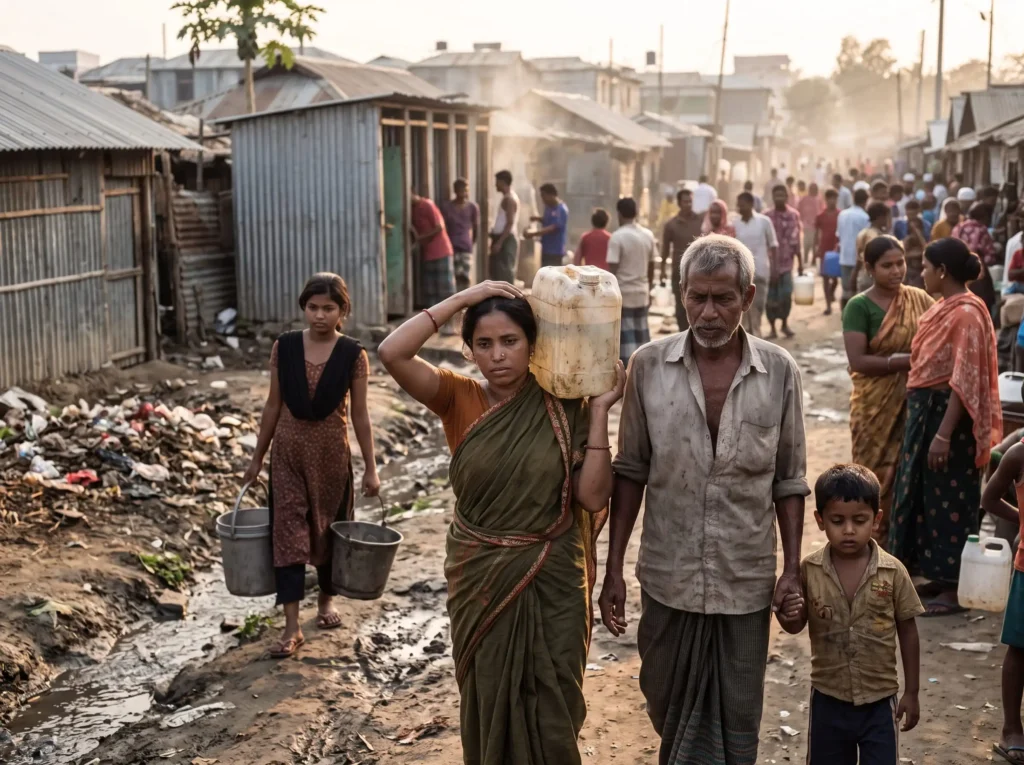
In Pakistan and other monsoon-affected settings, protection is required by day and night, because Aedes mosquitoes generally bite in daylight, while many malaria vectors are more active after dusk. Pakistan’s July 2026 monsoon advisory also issues warning that rainfall, waterlogging and stagnant water can raise mosquito breeding. [4][6][8]
The Family Mosquito Bite Prevention Checklist
| Before anyone goes outdoors or settles down to sleepApply a registered insect repellent on exposed skin accurately as the label directs.Select loose, long-sleeved clothing and long trousers when practical.Examine doors and windows; repair holes and close gaps around screens.Use a well-fitted net over beds, cots, strollers or carriers when rooms are not screened.Empty and scrub water-holding containers once a week.Pack repellent and a light cover for school, travel, outdoor work or evening gatherings. |
1. Choose a Recognized Repellent
For mosquito bite prevention, use a product registered or accepted by the relevant national regulator and follow its label. CDC registers active ingredients used in EPA-registered products like DEET, picaridin or icaridin, IR3535, oil of lemon eucalyptus, para-menthane-diol and 2-undecanone. Availability and registration differ by country, so check the product instead of relying only on a familiar brand. [1][2]
Higher concentrations normally provide longer protection. Take care of following:
- Reapply only as directed.
- Do not spray under clothing, on damaged skin, near the eyes or mouth, or where mist may be inhaled.
- When using sunscreen, apply sunscreen first and repellent second. [1][5]
Mosquito Repellent Safety for Children
| Situation | Safer approach |
|---|---|
| Baby younger than 2 months | Never apply skin repellent. Use covering clothing and a tightly fitted net over the cot, stroller or carrier. |
| Child 2 months and older | Use an age-appropriate registered product according to its label. An adult should apply it. |
| Child younger than 3 years | CDC warns against products containing oil of lemon eucalyptus or PMD. |
| Face application | Put repellent on the adult’s hands first, then apply sparingly to the child’s face. |
| Hands and damaged skin | Do not apply to a child’s hands, eyes, mouth, cuts, rashes or irritated skin. |
Keep repellent out of children’s reach. If a reaction occurs, stop use, wash the area and contact a clinician or local poison-information service.
2. Use Clothing as a Physical Barrier
Wear loose long sleeves, trousers, socks and closed footwear decrease exposed skin. Breathable fabrics are rational in hot weather and specifically useful for babies too young for skin repellent.
Approved permethrin-treated clothing may add protection. Pursue washing instructions, never apply clothing products directly to skin, and protect uncovered skin separately. [1]
3. Use Mosquito Nets Correctly
Mosquito nets are helpful in unscreened rooms, outdoors and during daytime naps. Day use is important for dengue exposure, while night use matters at places where malaria vectors are active. WHO recognizes insecticide-treated nets as a core malaria-prevention measure in applicable settings. [3][4]
Precautions for mosquito ne use:
- Use a net large sufficient to surround the sleeping space.
- Tuck the edges tightly under the mattress or sleeping mat and close every opening.
- Repair holes quickly and keep the net away from candles, heaters and open flames.
- Fit cot and stroller nets securely so that they cannot touch the baby’s face.
- Use insecticide-treated nets where advised locally; follow care and replacement instructions.
4. Keep Mosquitoes Out of Living Spaces
Repair screens on windows, doors and vents, close gaps, and use air conditioning or fans where accessible. Fans supplement instead of replacing repellent and screens.
For mosquitoes indoors, use only registered indoor products as labelled. Keep children, pets and food away, ventilate as instructed and do not mix products. Coils, vaporizers and sprays can help, but they do not substitute barriers and source reduction. [3][7]
5. Remove Breeding Sites Every Week
Once a week, empty and scrub, turn over, cover or dispose of water-holding containers, including coolers, pots, buckets, tyres, toys, tanks and trays. Pakistan’s dengue advisory particularly recommends weekly covering, emptying and cleaning of domestic water containers. [7]
Keep essential stored water covered and report unsafe public waterlogging. Source reduction benefits to prevent dengue mosquito bites but it should be combined with repellent and physical barriers.
6. Match Protection to Time and Activity
| Family situation | Protection plan |
|---|---|
| School or daycare | Covering uniform where possible, age-appropriate repellent applied by an adult, intact screens and no open water containers. |
| Evening gathering | Use repellent before leaving, long loose clothing, fans or screened seating, and a net for a sleeping baby. |
| Outdoor work | Long clothing, repellent reapplied by label timing, treated gear when appropriate, and take rest in a screened area. |
| Travel or overnight stay | Carry adequate repellent, inspect screens, use a bed net if the room is exposed, and check the sleeping area before dark. |
| Daytime nap | Use a net or screened room in dengue-risk areas because Aedes mosquitoes normally bite during the day. |
Pregnancy and Breastfeeding
CDC and EPA state that EPA-registered repellents are assessed for safety and effectiveness, that include use for pregnant and breastfeeding people, when used as directed. Prevent inhaling spray and seek advice if the label is unclear or if there was a serious previous reaction. [1][2]
Common Mosquito-Prevention Myths
| Myth | Reality |
| “Natural” always means safer or effective. | Unregistered oils, wristbands, patches and electronic devices may not provide consistent protection. [2] |
| One application lasts all day. | Protection time differs by ingredient, concentration, sweating, water exposure and the label. |
| Dengue mosquitoes bite only at night. | Aedes mosquitoes often bite during the day, specifically in the morning and late afternoon. [3][6] |
| A mosquito net substitutes repellent everywhere. | Nets protect the enclosed sleeping space; the net other measures are still necessary for outside exposed people. |
| Fogging inhibits all future bites. | Adult control may be temporary and does not eliminate eggs or larvae in water containers. |
Takeaway: Build a Routine, Not a One-Time Fix
The most consistent answer to how to prevent mosquito bites at home is a multilayered family routine.
To prevent mosquito bites at home:
- use a recognized repellent perfectly,
- cover skin when practical,
- repair screens,
- fit mosquito nets tightly
- remove standing water each week.
- provide babies and children with protection appropriate for age
- follow every product label
- plan for preventing bites in the daytime as well as at night-time
Save this a copy of this checklist near the door, incorporate repellent in school and travel planning, and relate it to Health Glow’s rainy-season mosquito guide and stagnant-water inspection. Stable small actions are more successful than waiting for an outbreak or relying on one device.
Medical and Product-Safety Disclaimer
| ImportantThis article specifies education on general prevention and does not diagnose or treat illness.Product registrations, age instructions and active ingredients change by country; therefore, always follow the label and local public health advice.Look for urgent medical help for breathing difficulty, swelling of the face or throat, collapse, severe illness or another emergency symptom. |
Reference Sources Used for Fact Check
[1] Centers for Disease Control and Prevention. Preventing Mosquito Bites. Updated 28 August 2024; accessed 28 July 2026. Open source
[2] U.S. Environmental Protection Agency. Regulation of Skin-Applied Repellents. Updated 25 June 2026; accessed 28 July 2026. Open source
[3] World Health Organization. Dengue. Updated 21 August 2025; accessed 28 July 2026. Open source
[4] World Health Organization. Malaria. Updated 4 December 2025; accessed 28 July 2026. Open source
[5] U.S. Environmental Protection Agency. Using Insect Repellents Safely and Effectively. Accessed 28 July 2026. Open source
[6] World Health Organization. Dengue Fever – Pakistan: Prevention guidance. Accessed 28 July 2026. Open source
[7] National Institute of Health, Pakistan. Advisory for the Prevention and Control of Dengue Fever. March 2025; accessed 28 July 2026. Open source
[8] Ministry of National Health Services, Regulations and Coordination, Pakistan. Advisory for Prevention and Control of Monsoon-Related Diseases. 1 July 2026; accessed 28 July 2026. Open source