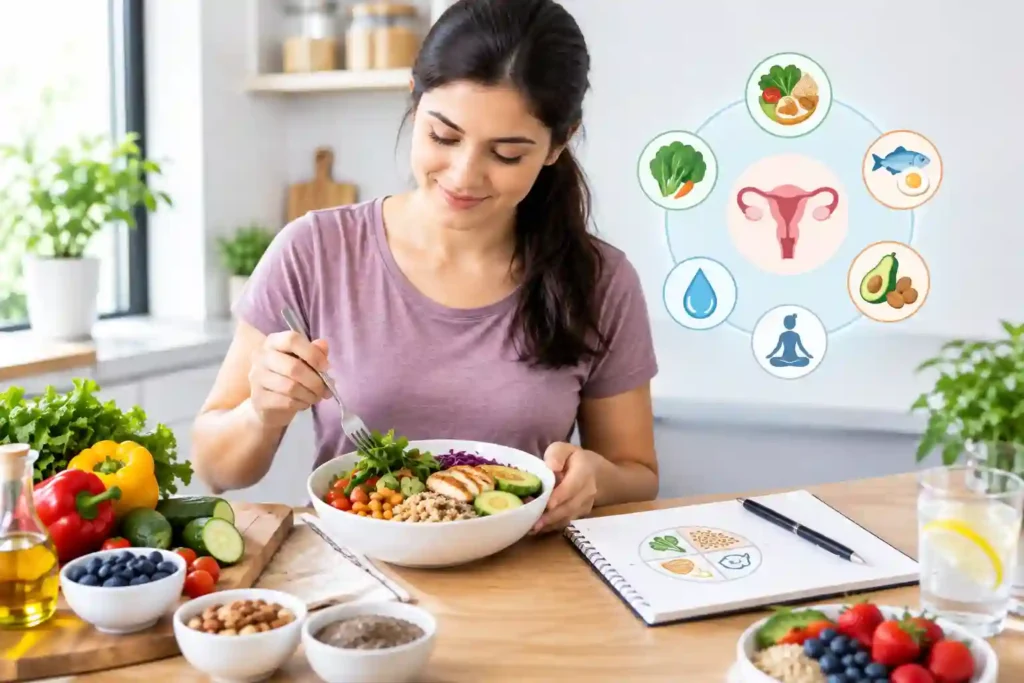
This concise document describes feasible, flexible meal-building approaches for individuals who are interested in sustainable, socially adjustable nutrition without restrictive rules or detox myths for a patient with polycystic ovary syndrome, focusing on. It facilitates readers to overcome food confusion, less fatigue in taking decisions, and build confidence through rational daily food choices by discussing balanced eating, foods for PCOS, meal plan basics, and insulin resistance management.
You may have seen PCOS food lists and retrieved three different sets of forbidden foods. One prohibits fruit, another eliminates dairy, and a third agrees to balance hormones if you buy powders and leave familiar meals. That confusion is not a personal failure; rather, it is online advice that changes an adaptable eating pattern into an exhausting purity test.
A reasonable PCOS diet for beginners starts somewhere else: make satisfying meals you can duplicate, see how your body and laboratory results respond, and adjust with support from competent person. Food can provide metabolic and overall health; however, no food ingredient, cleanse or eating plan treats polycystic ovary syndrome.
Is There One Best Diet for PCOS?
No, practically, there is no such best diet for PCOS, that is appropriate for everyone. The 2023 International Evidence-based PCOS Guideline declares that evidence does not verify that one diet composition better than another for metabolic, reproductive, hormonal, psychological or body-measure effects. It proposes sustainable healthy eating shaped to specific personal preferences and goals while taking away pointlessly restrictive or nutritionally unbalanced diets.
That counts because PCOS is varied. A July 2026 report from the U.S. National Center for Health Statistics observed that 8.7% of women ages 20–49 in the household population reported to be diagnosed of having PCOS in 2022–2023. Symptoms, medications, glucose regulation, fertility goals, food access, culture and eating-disorder history vary. The helpful question is not Which ideal diet wins? but Which balanced plan is safe, affordable and sustainable for this person?
What Should a Balanced PCOS Meal Include?
A simple plate can decrease decision fatigue not to weigh exactly. Try manufacturing most meals from four flexible components:
- Vegetables or fruit for fiber, micronutrients, color and variety.
- A fiber-rich carbohydrate like beans, lentils, oats, brown rice, whole-grain bread, corn, potatoes or fruit.
- Protein fish, eggs, poultry, tofu, yogurt, cottage cheese, beans or lentils.
- Unsaturated fat from nuts, seeds, avocado, olives or plant oils.
This is a framework, rather than a prescription. The American Diabetes Association plate method utilizes half a plate of non-starchy vegetables, one-quarter protein and one-quarter quality carbohydrate. That may be helpful for some people with insulin resistance; however, individual requirements change depending on plate size, appetite, activity, medication, pregnancy and access. A registered dietitian can individualize portions without converting every meal into arithmetic.
Carbohydrates Are Not the Problem
Many people searching for an insulin resistance diet PCOS are advised to exclude carbohydrates. However, carbohydrates are present in foods that can provide fiber, protein, vitamins and minerals. Such useful, but carbohydrate rich foods include lentils, chickpeas, fruit, milk, yogurt, whole grains and starchy vegetables.
Consider form of a food and its companions rather than judging it by the word carb,. Generally, more fiber is provided to stomach by intact or slightly processed carbohydrates than sugary drinks, candy or many refined snacks. A meal is more filling and causes moderate rise in blood glucose, if carbohydrates are combined with protein, fat and fiber. Oats with yogurt and nuts, whole-grain toast with eggs and tomatoes, or rice with lentils, vegetables and olive oil are some examples where carbohydrates are combined with protein, fat and fiber.
No need to label dessert or white rice toxic. More important is frequency, portion, the total meal and the overall pattern. People who use insulin or glucose-lowering medicine; they should make key carbohydrate changes with their healthcare team because medication requirements and risk level of hypoglycemia can change.
Select Foods That Make Balanced Meals Easier
Practical foods for PCOS assist you assemble enough, enjoyable meals. Stock preferred food that fits your budget and cooking reality. Suitable combining from following groups of food makes a balanced diet easy.
- Fiber: beans, lentils, vegetables, berries, pears, oats and whole grains.
- Protein: eggs, fish, chicken, tofu, tempeh, plain yogurt, cottage cheese and pulses.
- Unsaturated fats: peanuts, walnuts, seeds, avocado, olive oil and canola oil.
- Convenient options: frozen vegetables, canned beans, tinned fish, microwaveable brown rice and unsweetened yogurt.
Fresh is not necessarily superior. Frozen and canned foods may be nutritious, economical and less liable to spoil. Drain and rinse canned beans or vegetables if you want to decrease sodium. Compare Nutrition Facts labels for fiber, added sugar, saturated fat and sodium instead of believing front-of-package phrases like “keto,” “natural” or “hormone-friendly.”
Health Glow’s guide to PCOS and weight gain describes why insulin resistance, sleep, medicines, appetite and environment justify more nuance than “eat less.”
PCOS Meal Plan Basics That Survive Real Life
PCOS meal plan basics make options, rather than a rigid seven-day contract. Start with two breakfasts, two lunches and three dinners that you enjoy. Replicate them, then rotate produce, grains, seasonings and proteins.
For example:
- Breakfast: vegetable omelet, whole-grain toast and fruit; or oats with milk, chia seeds and berries.
- Lunch: chickpea salad with whole-grain pita; or leftover chicken, rice and vegetables.
- Dinner: salmon, potatoes and greens; bean chili with avocado; or tofu stir-fry with noodles.
- Snack, if desired: fruit with nuts, yogurt, hummus with vegetables, or cheese with crackers.
Regular eating can ease some people coping with intense hunger or long gaps that end in eating too much. Others prefer different timing. It is no necessary to eat six times daily, omit breakfast or fast. Note energy, hunger, gastrointestinal comfort, sleep and glucose readings if clinically recommended. Adjust the structure instead of interpreting one difficult day as failure.
Make the Pattern Culturally Adaptable
Balanced eating should not force stopping cultural food traditions. Dal with roti, beans with tortillas, rice with grilled fish, or stew with couscous can all merge carbohydrates, protein, vegetables and fat.
If you eliminate one food, try adding a substitute. For example, add vegetables to biryani, combine paratha with eggs and yogurt, add in beans in a rice dish, or serve fruit alongside breakfast. Choose portions and cooking methods that are suitable for your needs without announcing a cultural staple forbidden. Sustainable PCOS healthy eating should fit identity, family meals, time and finances.
What About Weight Loss?
Lifestyle support can benefit people with PCOS even without weight loss, according to the international guideline. Weight is not a behavior, and a universal target is inappropriate. If weight change is a personal goal or clinically relevant, care should be respectful, individualized and free from stigma. Blood pressure, glucose, lipids, menstrual patterns, energy and quality of life can be meaningful outcomes too.
Anyone with a history of restrictive eating, binge eating, purging, significant food anxiety or rapid weight change should tell a clinician. A dietitian and mental-health professional with eating-disorder experience can help make nutrition care safer.
Do Supplements or Detoxes Treat PCOS?
No supplement has been shown to cure PCOS, and hormone detox is a marketing phrase, not a medical treatment. Supplements can vary in dose, purity, interactions and pregnancy safety. Even products promoted as natural may cause side effects or interfere with medicines.
Ask a clinician or pharmacist to review every vitamin, herb and powder you use. Testing or supplementation may be appropriate for a documented deficiency or a clinical reason, but it should not replace established care. Read Health Glow’s PCOS symptoms and diagnosis guide to understand why treatment depends on symptoms and goals. If pregnancy is a priority, our PCOS and fertility guide explains when preconception and fertility advice may help.
A Realistic First-Week Plan
Choose a small change that you can repeat, for example:
- add a protein to breakfast,
- put a frozen vegetable beside dinner,
- swap one sugary drink,
- prepare tomorrow’s lunch while clearing dinner.
Keep foods you enjoy. Review progress by consistency and wellbeing, not perfection.
If you have diabetes, kidney disease, food allergies, gastrointestinal disease, are pregnant, take glucose-lowering medicine or have an eating-disorder history, seek individualized nutrition advice before making substantial changes.
Pair this guide with Health Glow’s PCOS symptoms, weight and fertility articles, then take a three-day record of meals, symptoms, medicines and questions to a registered dietitian or clinician.
Medical Disclaimer
This article presents general nutrition education, not tailored medical or dietetic advice. Do not change prescribed medicines or begin a restrictive diet or supplement regimen because of this content. Consult a trained clinician or registered dietitian for recommendations matched to your health, medications, pregnancy plans and eating history.