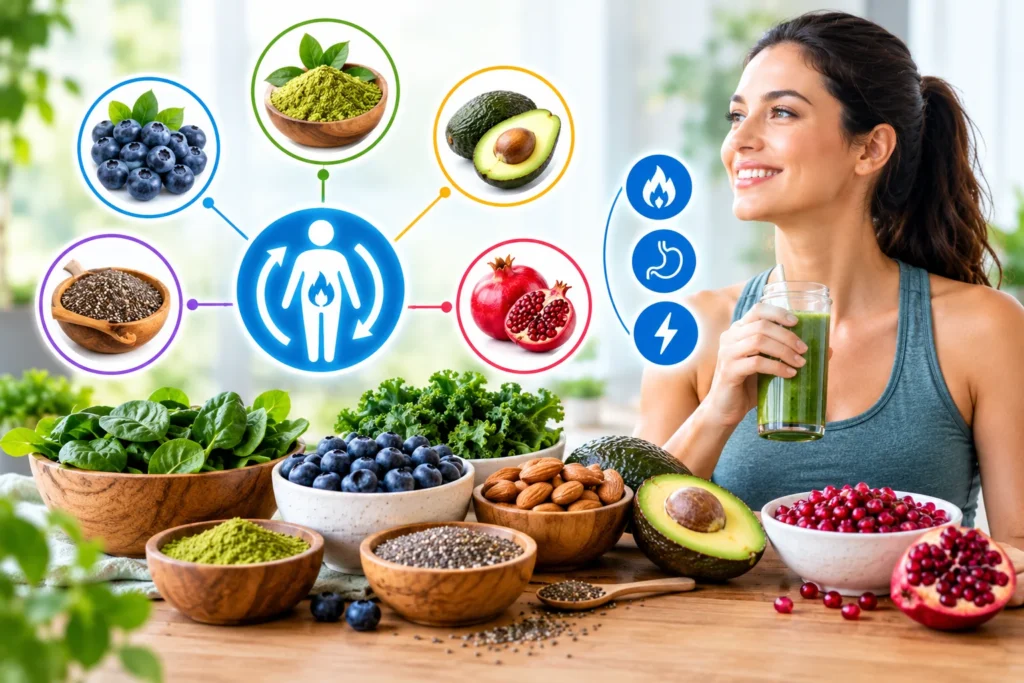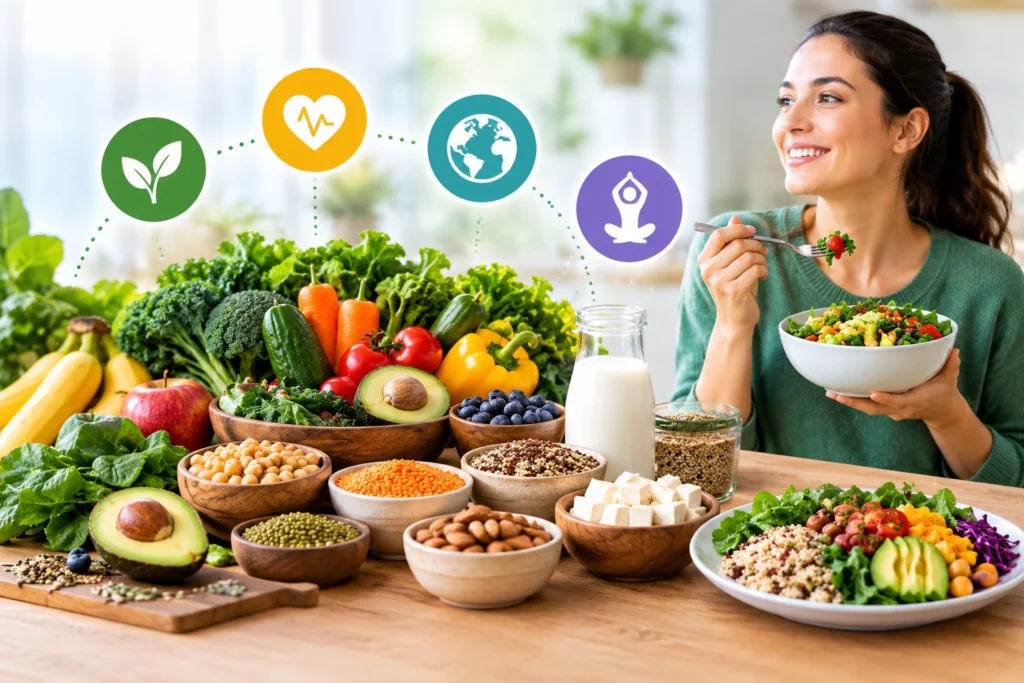
People commonly ask, what are plant-based foods? Contrary to the common belief, realistic answers are not limited to salad. Plant-based eating means eating meals made of vegetables, fruits, whole grains, legumes, nuts, seeds, soy foods, and other foods that are derived from plants. It may still contain some animal foods. Quality is more important than the label. The American Heart Association’s 2026 dietary guidance highlights that vegetables, fruits, whole grains, legumes, nuts, and seeds are part of heart-healthy foods.
What Are Plant Based Foods and What Is a Plant-Based Diet?
Knowing what are plant-based foods?, first look on origin and processing of food. Plant-based foods include vegetables, fruit, beans, peas, lentils, whole grains, nuts, seeds, tofu, tempeh, and plant oils. The difference still matters.
Again, what is a plant-based diet?
Answer: Plant-based diet is defined as eating pattern in which most or all of the diet consists of plant foods. “Plant-based” does not automatically indicate vegan, vegetarian, organic, or low-carbohydrate. If someone may eat mostly plants and occasionally include fish, eggs, dairy, or meat, it means one is on plant-based diet.
The phrase food that plants produce consists of fruits, vegetables, grains, legumes, nuts, seeds, and plant-derived oils. Variety is important because these foods differ nutritionally.
Types of Plant-Based Eating Patterns
Plant-based eating lives on a spectrum:
- Plant-forward omnivorous eating means that the majority of the plate consists of plants while some selected animal foods are also included.
- Vegetarian eating totally omits meat and fish but may contain dairy or eggs.
- Vegan eating omits all foods that are derived from animals.
- Mediterranean-style and flexitarian patterns mainly consist of plants without compelling complete removal of animal foods.
- Whole-food plant-based attitudes emphasize marginally processed plant foods.
This flexibility answers a general question: is plant based diet the same as vegan? Answer is no. Veganism evades animal-derived foods, while plant-based eating may simply prioritize plants.
What Does It Mean to Be Vegan?
People asking, what does it mean to be vegan? are frequently questioning about both diet and lifestyle. In dietary terms, vegan eating dismisses meat, poultry, fish, dairy, eggs, and other animal-derived ingredients. Many vegans also prevent animal products beyond food for ethical reasons.
This difference matters because what are plant-based foods? is a question of nutrition. On the other hand, veganism refers to a broader ethical framework. A person can eat a strongly plant-centered diet without classifying as vegan.
Plant Based Diet Advantages Supported by Evidence
If plant-centered diet patterns are well-constructed; they can increase fiber, potassium, folate, unsaturated fats, and phytonutrients. The American Heart Association comments that plant-rich dietary patterns are supportive for cardiovascular health. In a 2025 AHA-reported study, it was found that there is 16% lower risk of developing hypertension for every additional intake of 20 grams of plant protein per day. However observational findings cannot establish causation.
Important plant-based diet advantages may incorporate:
- Higher fiber intake, strengthening bowel regularity.
- Lower saturated fat when fatty meats are substituted intelligently.
- Additional minimally processed foods where meals emphasize beans, vegetables, whole grains, nuts, and seeds.
- Flexible alignment with heart-healthy patterns.
- Potentially lower costs when legumes substitute costly animal proteins.
However, these benefits are more related to food quality. Refined grains, sugary drinks, fries, and highly processed meat replacements can be plant-based but still nutritionally poor.
Nutrition: Protein, B12, Iron, Calcium, and Omega-3s
A healthy plant-based diet should include essential nutrients. Protein rich sources include beans, lentils, soy foods, peas, nuts, seeds, and whole grains. The American Heart Association observes that all plants have some protein, while tofu and tempeh are exceptionally effective sources.
Extra care for inclusion of vitamin B12 in diet is needed in fully vegan diets because trustworthy natural plant sources are lacking. Fortified foods or supplements are usually required. A systematic review of 141 studies noticed that plant-based eaters frequently consumed more fiber, folate, vitamins C and E, and magnesium, while tendency of having lower vitamin B12, calcium, and iodine intake or status was observed in vegan groups.
Plant iron, being non-heme iron, is absorbed less effectively than heme iron. Coupling beans or lentils with vitamin-C-rich foods can enhance absorption. Calcium rich sources include fortified plant milks, calcium-set tofu, tahini, and selected greens. Flax, chia, walnuts, and canola oil provide alpha-linolenic acid. Similarly, people who avoid fish can discuss algae-derived EPA/DHA with a clinician.
Reasonable Meal Ideas Using Food That Plants Produce
The easiest methodology is to build familiar meals instead of depending on specialty products. Try oatmeal with berries and walnuts, lentil soup, chickpea wraps, tofu stir-fry, bean chili, or brown rice bowls with black beans and salsa.
A simple plate can be a combination of:
- Half vegetables or fruit.
- One quarter whole grains or starchy vegetables.
- One quarter beans, lentils, tofu, tempeh, or another protein.
- A small amount of nuts, seeds, avocado, or unsaturated oil.
This makes food that plants produce feasible instead of restrictive.
Plant Based Diet Budget Plan: Can It Save Money?
A realistic plant based diet budget plan starts with inexpensive staples: beans, lentils, oats, rice, potatoes, frozen vegetables, seasonal fruit, peanut butter, and store-brand whole grains. Batch cooking reduces waste.
A 2026 scoping review of 76 studies found that traditional, minimally processed plant foods such as legumes were relatively low-cost across settings. Plant-based meat and dairy analogues often cost more than animal equivalents; average price ratios were about 1.81 to 2.04. Budget-conscious eating therefore favors basic staples over premium imitation products.
For a practical plant based diet budget plan:
- Plan several repeatable dinners before shopping.
- Buy dried or low-sodium canned legumes.
- Use frozen produce when fresh food may spoil.
- Compare price per serving.
- Cook double portions and freeze leftovers.
- Treat specialty vegan products as optional.
Is Plant Based Diet the Same as Vegan for Health Purposes?
The answer remains no. Health outcomes depend on what is actually eaten. A vegan diet rich in whole foods can be nutrient-dense, while one dominated by ultraprocessed foods may not be. A plant-forward diet that includes modest amounts of fish, yogurt, or eggs can still emphasize plants strongly.
Fully vegan eating also needs planning for vitamin B12 and potentially vitamin D, iodine, calcium, iron, zinc, and omega-3 fats.
How to Transition Without Making the Diet Complicated
Start with substitutions that fit foods you already enjoy. Replace half the ground meat in chili with lentils, add beans to tacos, make one breakfast oat-based, or schedule two meatless dinners weekly. Gradual change helps habits and digestion adapt.
Try this sequence:
- Add vegetables or fruit to meals you already eat.
- Replace one animal-protein meal with beans, lentils, tofu, or tempeh.
- Choose whole grains more often.
- Learn two affordable recipes that freeze well.
- Review nutrient gaps before going fully vegan.
Key Takeaway
A plant-based diet is not one strict menu. It is a continuum prioritizing vegetables, fruits, whole grains, legumes, nuts, seeds, and other slightly processed plant foods. The effective approach mixes variety, nutrient planning, affordability, and gradual change. Fully vegan eating expects specific attention to vitamin B12, and other nutrients that may need fortified foods, supplements, or professional guidance. Start with known foods, make plants the default more frequently, and create a pattern you can maintain.
References
- U.S. HHS & USDA (2026): Dietary Guidelines for Americans, 2025–2030. Source
- American Heart Association (2026): 2026 Dietary Guidance to Improve Cardiovascular Health. Source
- American Heart Association (2025): Plant-based proteins may help lower high blood pressure risk. Source
- PubMed indexed review (2026): Prices and cost drivers of alternatives to animal-source foods: a scoping review and narrative analysis. Source
- Neufingerl & Eilander (2022): Nutrient Intake and Status in Adults Consuming Plant-Based Diets Compared to Meat-Eaters: A Systematic Review. Source
- American Heart Association (2025): Protein in plants? It is in there — and here is why you should try it. Source