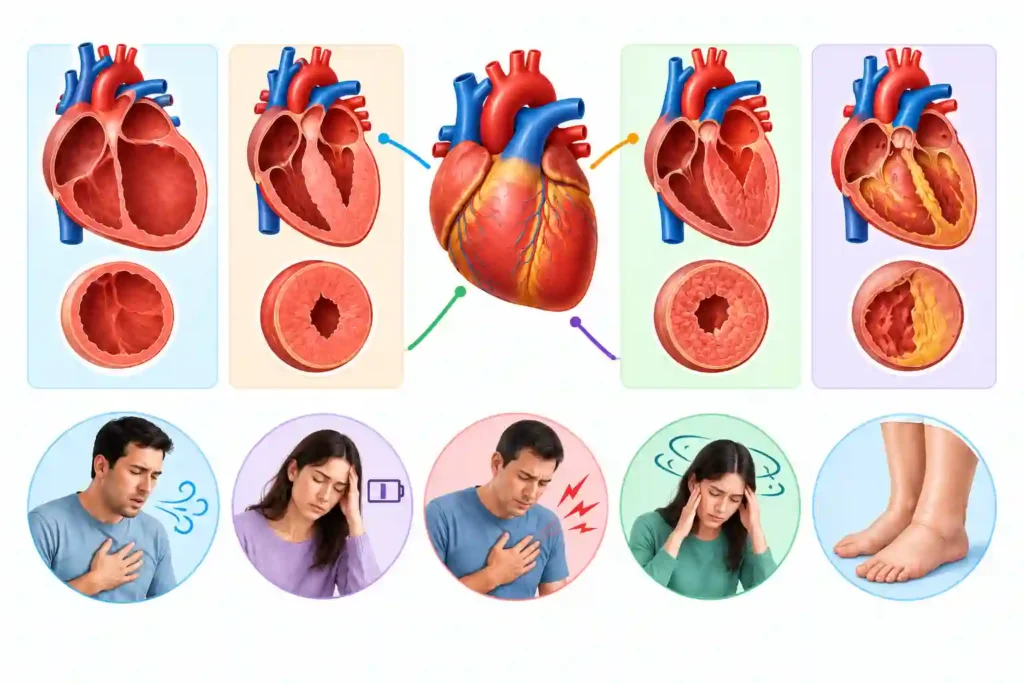
If you understand arrhythmia symptoms and causes, it enables you to explain an episode of arrythmia and you also easily can identify, when there is emergency. The purpose of this article is not to diagnose yourself; rather, it helps to raise red flags when needed. Palpitations may occur even with a normal rhythm; however, clinically important arrhythmias may cause slight symptoms or none. What is important; it involves the rhythm recorded during an event, its duration, related symptoms, health history, and effect on circulation. Arrhythmia symptoms may incorporate fluttering, racing, pounding, missed beats, an unusually fast or slow pulse, dizziness, breathlessness, weakness, chest discomfort, or fainting. Diagnosis should be based on a recorded rhythm and clinical evaluation, because palpitations can occur with a normal rhythm.
What Is a Heart Arrhythmia?
A heart arrhythmia implies trouble with the rate, regularity, or electrical sequence of the heartbeat. Electrical signals normally start in the sinus node and travel through an organized pathway, inducing the chambers to contract in order. The heart may beat too fast, too slowly, or irregularly, when signals initiate from an unusual location, do not travel normally, or are blocked altogether.
Tachycardia bradycardia terminology expresses rate, not a complete diagnosis. Tachycardia commonly means heart rate above 100 beats per minute while resting; bradycardia means a slower-than-expected rate, frequently below 60. Context is important, because exercise, fever, sleep, fitness, medicines, and age can also alter rate. Its significance is determined by the location and mechanism of the rhythm.
Arrhythmias incorporate premature beats, supraventricular tachycardia, atrial flutter, atrial fibrillation (AFib), conduction blocks, and ventricular rhythms. AFib is the most common handled arrhythmia. The CDC estimates that 12.1 million people in the United States will have AFib by 2050; AFib was recorded on 232,030 U.S. death certificates in 2021. Those figures concern AFib particularly, not every palpitation.
What Does an Arrhythmia Feel Like?
Usual irregular heartbeat symptoms involve:
- Fluttering, pounding, racing, or thumping in the chest
- A sensation that the heart missed, paused, or added a beat
- A pulse that feels strangely fast, slow, or irregular
- Dizziness, light-headedness, weakness, or near-fainting
- Shortness of breath or decreased exercise tolerance
- Chest discomfort, sweating, unusual fatigue, or confusion
- Fainting or collapse
Palpitation denotes awareness of the heartbeat, but it does not describe the rhythm itself. Palpitation is felt by a person during normal sinus rhythm, premature beats, or an arrhythmia. On the other hand, AFib and other rhythm disorders can be quiet and detected during an examination, wearable alert, or ECG.
The episode’s pattern assists clinicians. Clinicians diagnose by asking questions such as:
- Did it start and end quickly?
- Was the rhythm regular or messy?
- How long did it last?
- What were you doing?
- Did chest pain, breathlessness, dizziness, or fainting occur?
What Commonly Causes Palpitations?
Palpitations causes range from everyday triggers to electrical or structural heart disease. Common non-arrhythmic triggers and mimics are exercise, emotional stress, panic, pain, fever, dehydration, sleep loss, caffeine, nicotine, alcohol, and stimulant drugs. Heart rate is also affected by decongestants, asthma medicines, thyroid medicine, and other prescriptions or supplements.
The diseases that contribute towards palpitation include anemia, overactive thyroid, electrolyte abnormalities, low blood sugar, pregnancy-related changes, infection, lung disease, and sleep apnea. Rhythm disorders may also be due to age-related electrical changes, coronary artery disease, heart attack scarring, cardiomyopathy, valve disease, congenital heart conditions, inflammation, prior heart surgery, or inherited electrical syndromes.
Are Fast or Slow Heart Rates Always Dangerous?
No, fast or slow heart rates are not always dangerous in every circumstance. Body’s natural response to exercise, fever, pain, dehydration, or stress can initiate sinus tachycardia; therefore, treating the cause may resolve the rate. Supraventricular tachycardia can commence suddenly and cause a very fast, but regular rhythm. Ventricular tachycardia starts in the lower chambers and may be life-threatening, particularly when sustained or combined with structural heart disease.
Bradycardia is normal during sleep or in trained athletes. It can be concerning when the heart cannot continue satisfactory circulation, generating weakness, confusion, breathlessness, chest discomfort, or fainting. Other possible causes include medicines, sinus-node disease, and electrical conduction block are. Symptoms and an ECG are more important than considering one pulse number in isolation.
When Should an Irregular Heartbeat Be Urgent?
Call 911 in the United States, 1122 in Pakistan or your local emergency number, for palpitations or an abnormal heartbeat accompanying chest pain or pressure, severe shortness of breath, fainting, collapse, new confusion, marked weakness, or stroke signs such as facial droop, one-sided weakness, or speech difficulty. Call instantly if someone is unresponsive and not breathing normally; initiate CPR and use an automated external defibrillator if available and you are able to manage.
Urgent evaluation is also necessary for lasting speedy palpitations with worsening symptoms. Avoid driving yourself when emergency transport is available. Avoid taking another person’s medicine or using online instructions for carotid massage. Urgent assessment is still applicable even if an episode has stopped but includes fainting, chest pain, severe breathlessness, or neurologic symptoms,.
How Are Arrhythmias Diagnosed?
Diagnosis aims to connect symptoms with a recorded rhythm. Clinicians review episode timing, triggers, medicines and supplements, family history, heart conditions, thyroid disease, sleep apnea, and substance use. Examination may include pulse, blood pressure, heart and lung sounds, and signs of poor circulation or heart failure. Blood tests can check electrolytes, thyroid function, anemia, or other contributors.
Ecg and Longer Monitoring
An electrocardiogram (ECG or EKG) records the heart’s electrical activity from skin electrodes. It can identify many arrhythmias if they occur during the recording, but a normal brief ECG does not exclude an intermittent problem.
Other Tests
An echocardiogram checks heart structure, valves, and pumping. Exercise testing may evaluate exertional symptoms. A tilt-table test may help assess certain fainting patterns. In selected cases, an electrophysiology study maps electrical signals inside the heart. Test choice depends on frequency, urgency, baseline findings, and the clinical question.
What Happens After a Diagnosis?
Management depends on the rhythm, cause, symptoms, duration, and risks such as stroke or sudden cardiac arrest. Some premature beats require only explanation and trigger management. Other conditions may require treating thyroid or electrolyte problems, changing a contributing medicine, rhythm- or rate-control medication, anticoagulation for selected AFib patients, cardioversion, catheter ablation, a pacemaker, or a defibrillator.
These treatments are not interchangeable. Never start, stop, or adjust heart or blood-thinning medicines from general online advice. A clinician should explain the rhythm’s name, expected course, treatment goal, side effects, follow-up, and the symptoms that change the plan.
The Practical Next Step
For a nonemergency episode, note down the start time, duration, activity, pulse or device reading, linked symptoms, and possible prompts. Bring the record and medication list to a clinician. For red flags, call emergency services. Compare arrhythmias with other common heart conditions in Health Glow’s types-of-heart-disease pillar, then review the cardiomyopathy and heart-failure guides.
Medical Disclaimer
This article endows general education and does not diagnose, treat, or interchange individualized advice from a qualified healthcare professional. In an emergency, call your local emergency number.